

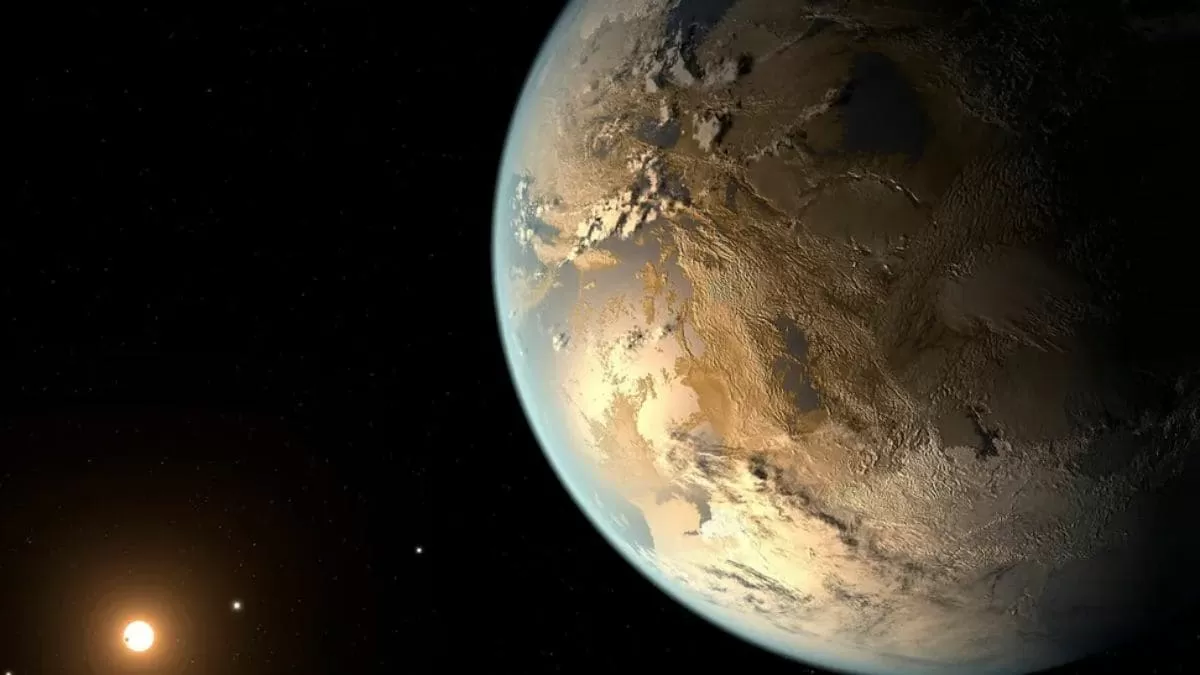
NASA has always been at the forefront of space exploration, constantly pushing the boundaries of what we know about the universe. And now, they have developed a groundbreaking model that could potentially change the way we search for life on distant planets and moons.
The model, developed by a team of scientists at NASA, allows for the estimation of the likelihood of life on distant planets or moons using limited and uncertain remote-sensing data. This means that even with the limited information we have about these far-off worlds, we can still make educated guesses about the possibility of life existing there.
This is a huge step forward in our search for extraterrestrial life. For years, scientists have been using telescopes to scan the skies for any signs of habitable planets or moons. However, with the vastness of space and the limited capabilities of our telescopes, it has been a daunting task. But now, with this new model, we have a powerful tool that can help us narrow down our search and focus on the most promising targets.
So how does this model work? The framework compares the habitat conditions of a distant planet or moon with known lifeforms or hypothetical organisms. By doing so, it offers a probabilistic tool to assess alien environments and improve telescope targeting. This means that we can now use the limited data we have to determine the likelihood of life existing on a particular planet or moon.
This is a game-changer in the ongoing search for extraterrestrial life. With this model, we can now make more informed decisions about which planets or moons to study further. It will also help us to better understand the conditions necessary for life to exist, and potentially even discover new forms of life that we never thought possible.
But this model is not just limited to the search for life. It has the potential to be used in a variety of other fields as well. For example, it could be used to assess the habitability of other planets for future human missions. It could also be used to study the evolution of life on Earth and how it may have developed on other planets.
The possibilities are endless, and this is just the beginning. The team at NASA is constantly working to improve and refine this model, making it an even more powerful tool for future space exploration. And with each new discovery, we are one step closer to answering the age-old question: are we alone in the universe?
This breakthrough is a testament to the incredible work being done by NASA and its team of scientists. It is a reminder of the importance of investing in scientific research and exploration. With each new discovery, we gain a better understanding of our place in the universe and the potential for life beyond our own planet.
But this model is not the end-all-be-all in our search for extraterrestrial life. It is just one piece of the puzzle, and there is still much more to be done. We must continue to push the boundaries of science and technology, and explore the vastness of space with an open mind and a sense of wonder.
So let us celebrate this incredible achievement by NASA and look forward to what the future holds. Who knows, with this new model, we may soon discover that we are not alone in this vast and mysterious universe. And that thought alone is enough to inspire us to keep reaching for the stars.
