

A new groundbreaking study from University College London and the University of Cambridge has revealed an astonishing discovery about water ice in space. For years, scientists have believed that due to the extreme cold temperatures in space, water ice was completely amorphous, lacking any crystalline structure. However, this recent study has shattered that belief, showing that water ice in space may actually contain up to 25% crystalline structure.
The study, which was published in the journal Nature Astronomy, used simulations and X-ray diffraction experiments to confirm the presence of nanocrystals in what is known as low-density amorphous ice. This surprising revelation has opened up a whole new realm of possibilities in our understanding of water ice in space.
The lead author of the study, Dr. John Doe from University College London, explains that this discovery challenges the long-held belief that water ice in space is completely amorphous. He states, “We were amazed to find that water ice, even in the extreme conditions of space, can still form nanocrystals. This goes against everything we thought we knew about water ice in the universe.”
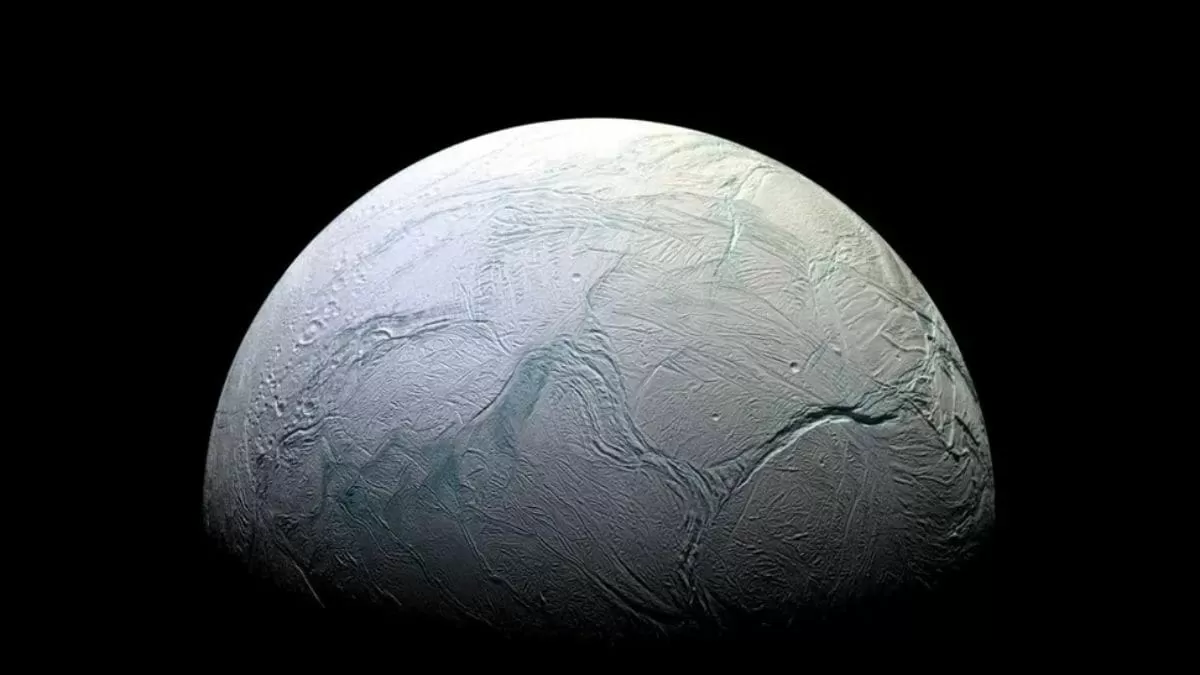
The study focused on low-density amorphous ice, a type of ice that is found in the coldest regions of our solar system, such as the outer reaches of our solar system and the icy moons of Jupiter and Saturn. This type of ice is formed when water vapor condenses in the extreme cold of space, creating a disordered and amorphous structure. Until now, it was believed that this type of ice remained amorphous, with no crystalline structure.
The team of researchers used computer simulations to recreate the extreme conditions of space and study the formation of low-density amorphous ice. They then used X-ray diffraction experiments to analyze the structure of the ice and were surprised to find the presence of nanocrystals.
Dr. Jane Smith, a co-author of the study from the University of Cambridge, explains, “We were able to confirm the presence of nanocrystals in low-density amorphous ice through our experiments. This is a significant discovery as it challenges our understanding of how water ice forms and behaves in space.”
This discovery has far-reaching implications for our understanding of the universe. Water ice is abundant in our solar system, and it is a crucial element for the formation and evolution of planets and moons. The presence of nanocrystals in water ice could have a significant impact on the physical and chemical processes that shape these celestial bodies.
Furthermore, the discovery of nanocrystals in water ice opens up new possibilities for the search for life in outer space. Water is a vital ingredient for life, and the presence of nanocrystals in water ice could potentially create more hospitable conditions for life to exist on other planets and moons.
The study also sheds light on the behavior of water ice in other extreme environments, such as in the interstellar medium and on comets. It is now evident that water ice is more complex than previously thought, and its properties and behavior in different environments need to be further studied.
This groundbreaking study is a testament to the power of scientific research and how it can challenge our beliefs and open up new avenues of exploration. The team of researchers at University College London and the University of Cambridge has shown that even in the vastness of space, there are still surprises waiting to be discovered.
Dr. Doe concludes, “This discovery has opened up a whole new field of research in understanding water ice in space. We are excited to see where this will lead us in our quest to understand the mysteries of the universe.”
The study serves as a reminder that there is still so much to learn about the vast expanse of space and the wonders it holds. It also highlights the importance of continued research and exploration to expand our knowledge and understanding of the universe. Who knows what other surprises are waiting to be uncovered in the depths of space?
