


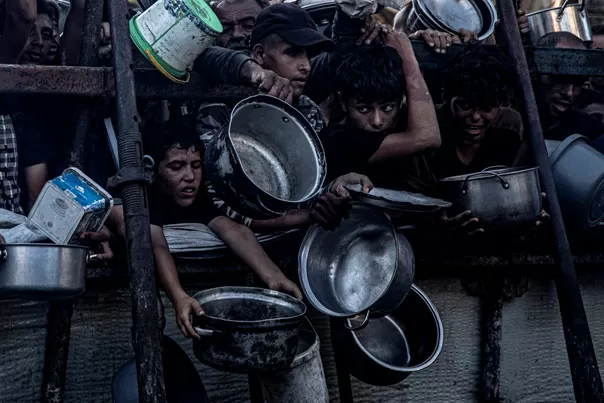
Amidst the ongoing conflict in Gaza, the risk of famine has reached its worst levels since the start of the conflict. The Food Security Classification has recently released a new report, titled “IPC ALERT: Worst-case scenario of Famine unfolding in the Gaza Strip”. This report highlights the urgent need for analysis and action to address the rising need for consumption and nutrition in the region.
The Gaza Strip has been facing a dire humanitarian crisis for years, with the ongoing conflict only exacerbating the situation. The blockade imposed by Israel has severely restricted the movement of goods and people, leading to high unemployment rates and limited access to basic necessities. The recent escalation of violence has only added to the already dire situation, leaving thousands of families displaced and in urgent need of assistance.
According to the latest report from the Food Security Classification, the Gaza Strip is facing a worst-case scenario of famine. The report highlights that the current conflict has severely disrupted food production and distribution, leading to a sharp decline in food availability. This, coupled with the high poverty rates and limited access to essential services, has resulted in a significant increase in food insecurity and malnutrition.
The report also warns that if urgent action is not taken, the situation in Gaza could deteriorate even further, leading to a full-blown famine. This would have devastating consequences for the people of Gaza, who are already struggling to survive amidst the ongoing conflict. It is estimated that over 1.6 million people in Gaza are in urgent need of food assistance, with children being the most vulnerable.
The rising need for consumption and nutrition in Gaza is a cause for concern, and it is imperative that immediate action is taken to address this crisis. The international community must come together to provide much-needed aid and support to the people of Gaza. This includes ensuring the safe and unrestricted movement of goods and people, as well as providing financial assistance to humanitarian organizations working on the ground.
In addition to providing immediate aid, there is also a need for long-term solutions to address the root causes of food insecurity in Gaza. This includes lifting the blockade, creating job opportunities, and investing in sustainable agriculture and food production. These measures will not only help alleviate the current crisis but also build resilience for future challenges.
It is heart-wrenching to see the people of Gaza suffer amidst the ongoing conflict. The children, in particular, are bearing the brunt of this crisis, with many facing severe malnutrition and health issues. We cannot turn a blind eye to their suffering, and it is our moral obligation to take immediate action to address this crisis.
The report from the Food Security Classification serves as a wake-up call for the international community. We cannot afford to wait any longer; urgent action is needed to prevent a famine in Gaza. We call upon all governments, organizations, and individuals to come together and provide the necessary support to the people of Gaza. Together, we can make a difference and bring hope to those who are suffering.
In conclusion, the situation in Gaza is dire, and the risk of famine is at its worst levels. The report from the Food Security Classification is a stark reminder of the urgent need for action. We must act now to prevent a humanitarian catastrophe in Gaza. Let us come together and show our support for the people of Gaza, who are in desperate need of our help.
