


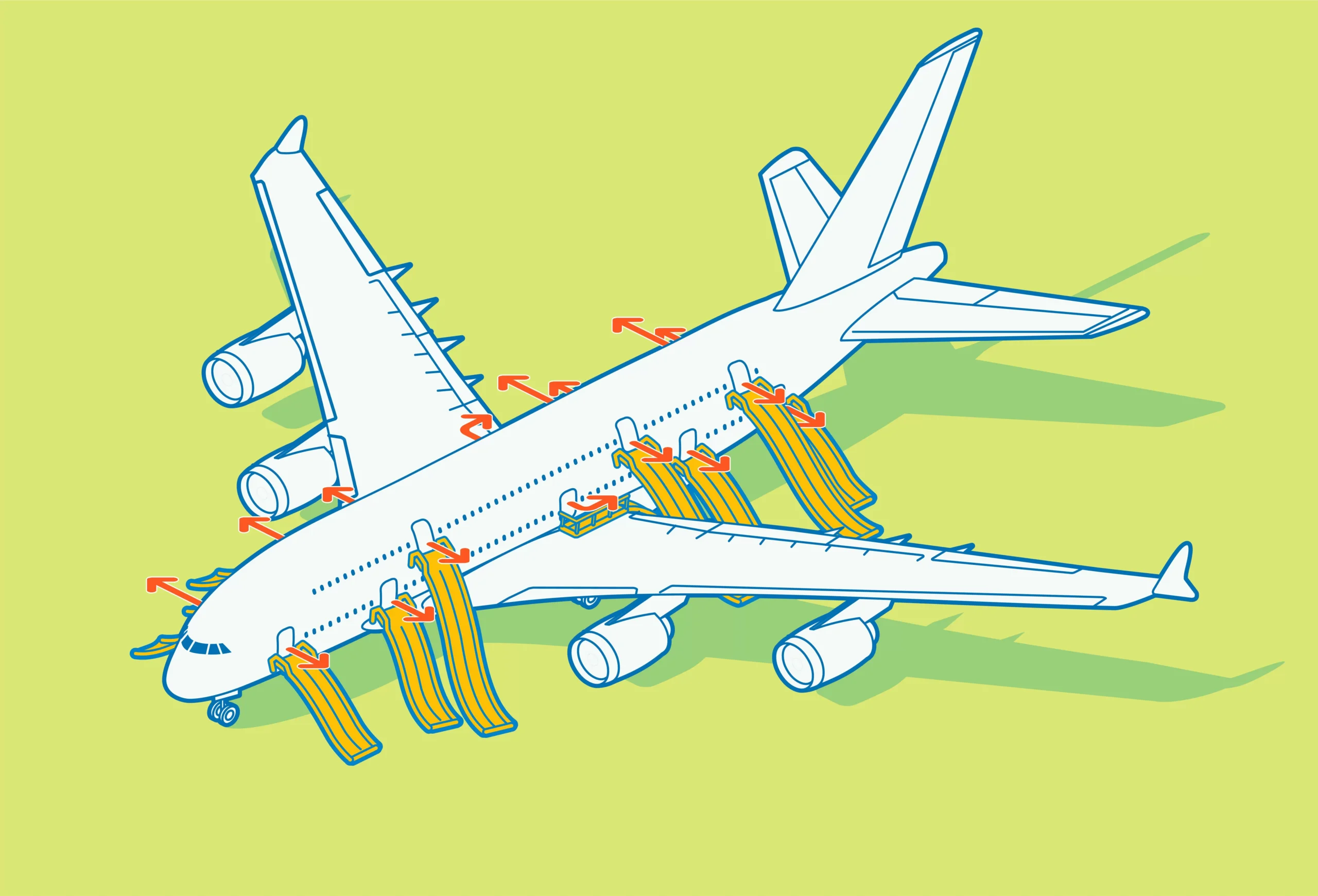
When it comes to air travel, safety is always a top priority. Before takeoff, we are all familiar with the safety announcements that inform us about what to do in case of an emergency landing. While no one wants to think about the possibility of an emergency landing, it is crucial to know how to handle one if it happens. Recently, a viral video showed passengers on an American Airlines flight evacuating during an emergency landing in Denver. The video captured people rushing off the aircraft, many of them holding onto their carry-on luggage. This raises an important question – should you really be taking your belongings with you during an emergency evacuation?
To answer this question, we spoke with flight attendants who have firsthand experience with emergency landings. They highlighted one potentially deadly mistake that passengers often make – trying to take their belongings with them during an evacuation. As tempting as it may be to grab your bags, doing so could cost you or someone else their life.
Valerie Fraser, an inflight crew member for JetBlue, explains, “Every second counts during an evacuation, especially in a critical event like smoke in the cabin. Even if it takes you just 5 seconds to grab a bag, that could be 5 seconds needed to save a life behind you.” In an emergency, the priority should be to get out of the aircraft safely, and leaving your belongings behind is crucial in achieving that.
In fact, there have been instances in the past where passengers have lost their lives because the evacuation was not done quickly enough. According to Fraser, “There’s a reason why we make announcements during the safety demo to leave everything behind in case of an emergency.” Apart from delaying the evacuation, taking your belongings with you can also pose hazards to others and the safety equipment, including the inflatable slides.
Andy L., a flight attendant with one year of experience, explains, “Bags can block the aisles, damage the slides, or even trip someone. It just adds chaos in a moment where every second matters, and the focus needs to be on getting everyone out quickly and safely.” The viral video from the American Airlines flight is a perfect example of how taking your belongings can lead to accidents. In the video, a man carrying a child and luggage lost his balance and fell on top of the child, causing an avoidable incident.
So when is it okay to take your bag during an emergency evacuation? The short answer is never. Your belongings are replaceable, but your life and that of others on board are not. While it may seem tempting to grab a small bag or luggage quickly, all of those items can be replaced, even if it may be inconvenient or expensive. Medical personnel are called immediately during an emergency, so they will have any necessary medical supplies. All other belongings will be returned to their rightful owners by the airline.
The only exception to this rule is if you have a pet on board. In that case, you should take them with you during the evacuation. However, for all other belongings, it is best to leave them behind and focus on getting out of the aircraft safely.
But how long do you have to evacuate a plane? According to Cora C., a flight attendant with seven years of experience, flight attendants are trained to evacuate everyone, including themselves, in 90 seconds or less. “In events like fires, that 90 seconds is the time it can take for the entire plane to become engulfed. Our goal is always to get everyone off safely and quickly, and not following our commands, which always include ‘LEAVE EVERYTHING,’ prevents us from doing that,” she explains.
The 90-second rule for aircraft evacuation takes into account a full plane with half the number of emergency exits in operation. In theory, the process could be quicker if all of the emergency exits are available, but that may not always be the case. Therefore, it is crucial to follow the instructions of the flight attendants and leave your belongings behind during an emergency evacuation.
But what happens if you don’t follow the rules? According to Andy, the FAA can fine passengers who do not follow safety instructions during an evacuation, such as trying to take their bags or not listening to the crew. “It’s not just a suggestion; it’s a real rule, and it’s in place to keep everyone safe,” he says. While this is not a common occurrence, flight attendants believe that implementing fines could incentivize passengers to follow instructions properly during an emergency landing
