


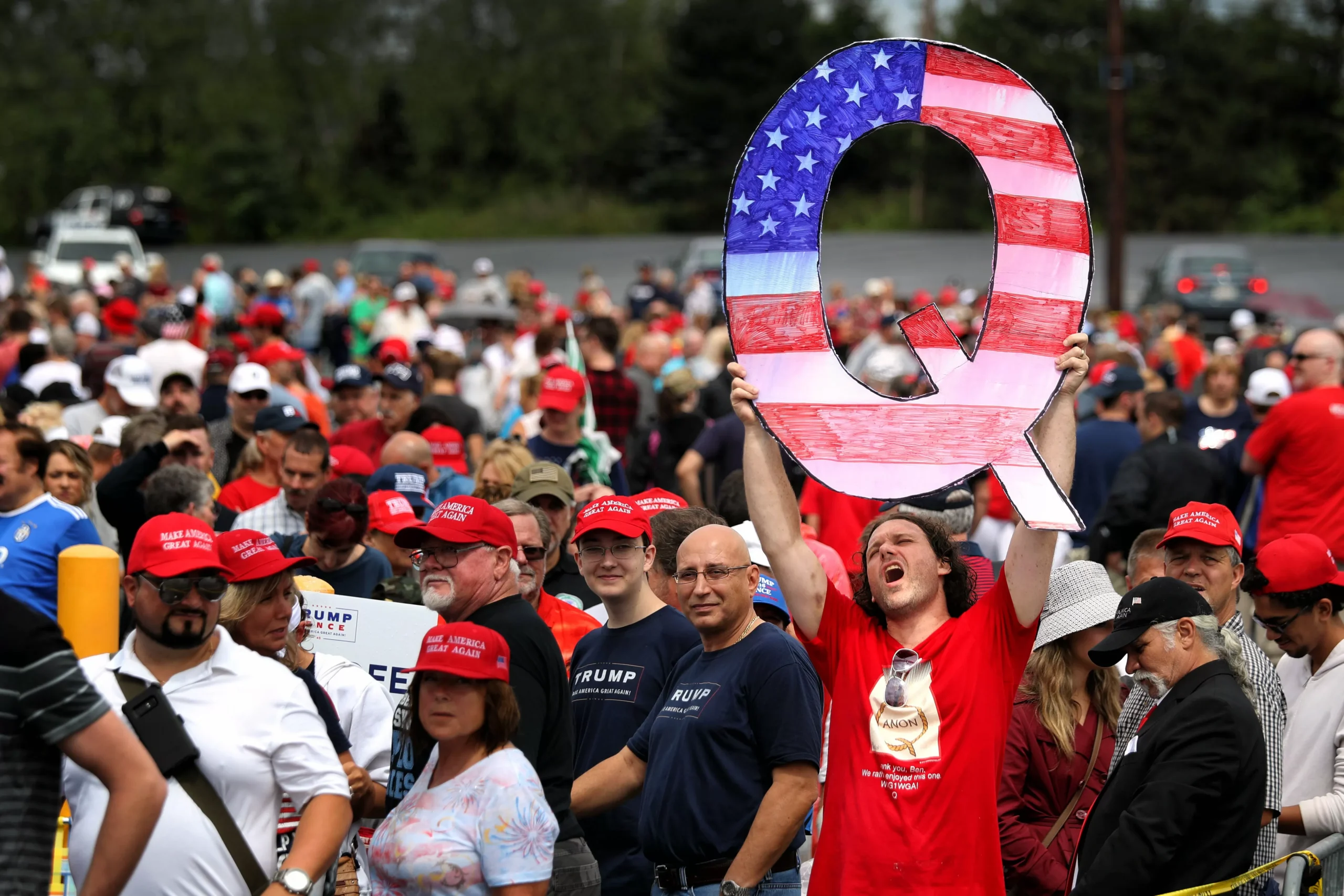
The prevalence of conspiracy theories in today’s society has become a major concern. From QAnon to the “Plandemic” conspiracy theory, it seems that more and more people are falling down the rabbit hole of unfounded beliefs. However, a new study has revealed that it is not the older generation that is most susceptible to these theories, but rather the younger demographic.
According to a recent study published in the journal Political Psychology, age is the most significant predictor of conspiracy beliefs among all other factors. The study, conducted by research fellow Jean-Nicolas Bordeleau and political studies professor Daniel Stockemer, found that people under 35 are consistently more likely to endorse conspiratorial ideas than any other age group.
The impact of conspiracy theories is not limited to personal beliefs, but it also affects our relationships and even our elections. We have witnessed siblings being estranged over extremist political views and individuals losing their family members to QAnon, a conspiracy theory that claims a satanic cabal of elites and pedophiles is working to enslave children. This dangerous belief has even led to acts of violence, such as the storming of the Capitol on January 6, 2021, driven by unfounded claims of voter fraud.
Bordeleau and Stockemer were driven to conduct this study in order to understand what factors influence people to buy into these unbelievable narratives. “We were really curious to understand why some people adhere to some really unbelievable narratives like the flat Earth theory and QAnon,” Bordeleau told HuffPost. “Our results don’t imply that all young people are attracted to all conspiracy theories, but what we can demonstrate is that younger people are more likely to believe various conspiracy theories than older individuals.”
The findings of the study go against the common stereotype that it is the older generation, such as the “Fox News-watching uncle,” who are more likely to fall into conspiracy theory traps. Bordeleau himself was initially surprised by the results as he expected it to be the case. However, the study clearly showed that it is the younger generation who are most likely to believe in conspiracies.
To gather data for their study, the researchers conducted a meta-analysis of 191 peer-reviewed articles published between 2014 and 2024. This large dataset, which included over 374,000 participants, confirmed the association between young age and belief in conspiracies. The researchers then conducted their own multinational survey of more than 6,000 people across six diverse countries, which further supported their findings.
One of the key factors that may explain why younger people are more prone to conspiracy beliefs is their deep sense of political disaffection and alienation. This can lead them to adopt an activist style of political participation and be exposed to more radical environments where conspiracy theories thrive. QAnon, for example, originated on the dark web and was first circulated on platforms like 4chan and 8chan.
In addition, the researchers suggest that low self-esteem may also play a role in younger people falling for conspiracy theories. Adolescence is a period of lower self-esteem, particularly for young girls, and conspiracy theories can provide a sense of empowerment and control in their lives.
Bordeleau and Stockemer hope to further study the socialization component of conspiracy beliefs, including how young people are exposed to such narratives and whether social pressures play a role. They also believe that more efforts should be made to help young people become more media literate, whether through education reforms, targeted interventions, or policy changes.
The growing impact of conspiracy theories in our political and personal lives cannot be ignored. It is up to us as a society to take action and address this issue. With the help of research like this, we can work towards finding effective solutions and promoting critical thinking among the younger generation. Let us not allow conspiracy theories to divide us and cause harm to our society.
