

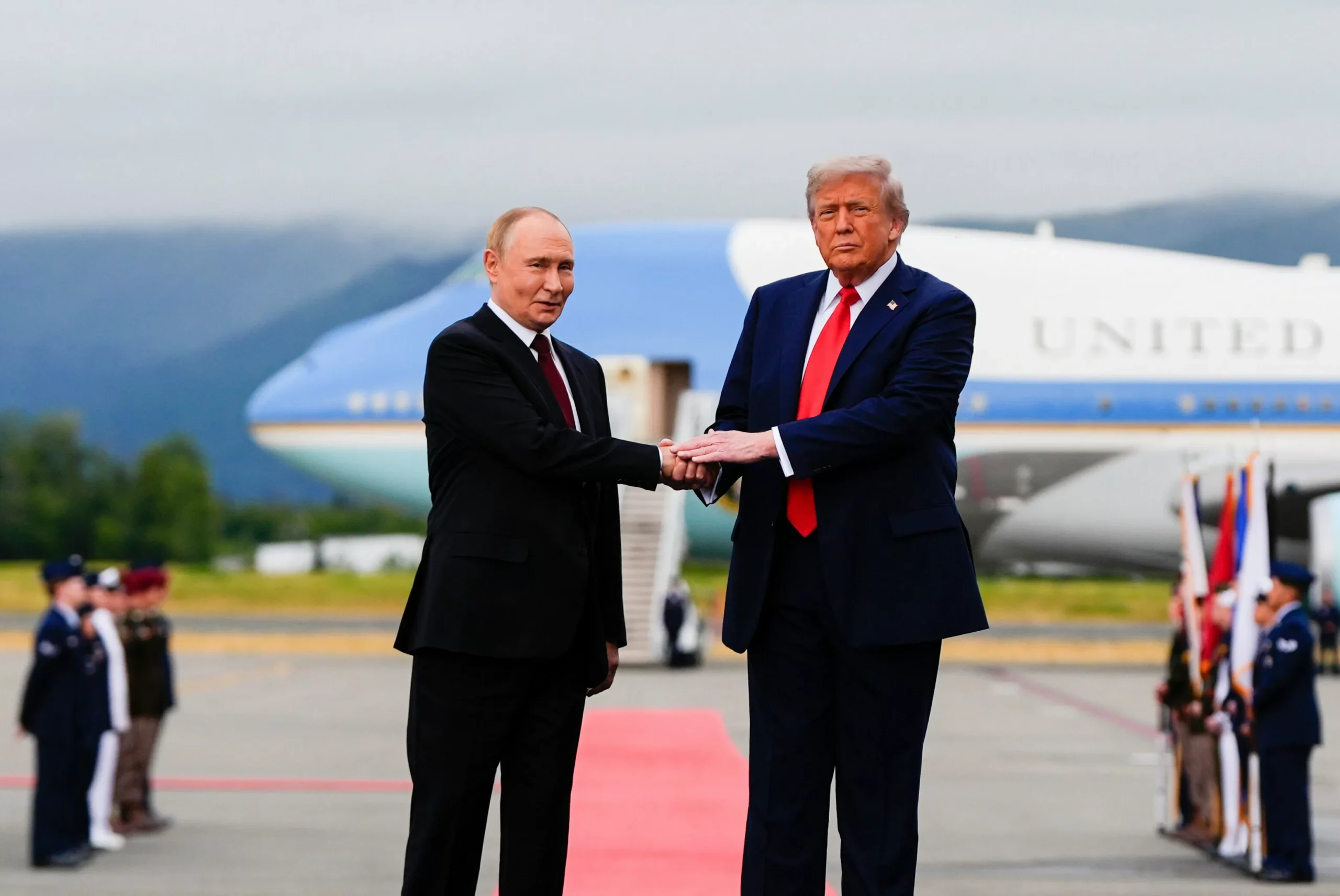
President Donald Trump and Russia’s President Vladimir Putin met on Friday, August 15, 2025 in Alaska, and once again, Trump seemed to be siding with Putin. Despite being the leader of the free world, Trump has developed a surprisingly warm relationship with the Russian authoritarian and has repeatedly forgiven him for going back on his word.
While previous US presidents and European allies have shunned Putin for his aggression towards Ukraine, Trump rolled out the red carpet for him at the summit. Despite his previous warnings of “severe consequences” for Russia if they did not end their invasion of Ukraine, Trump immediately dropped his demand for a ceasefire and left the summit with only a few photos.
For Putin, the summit was a triumph as it ended his isolation on the world stage. However, the impact of their meeting seemed to stay with Trump, as he continued to repeat Kremlin propaganda and blame Ukraine for the ongoing war, even after meeting with European leaders and Ukrainian President Volodymyr Zelenskyy.
The question is, why does Trump continue to side with Putin? According to Dr. Neil Melvin, director of international security at the RUSI think tank, Trump sees Putin not as an enemy, but as someone to negotiate with. He believes that Trump sees himself as a “broker” and is willing to do whatever it takes to achieve his goals.
One of Trump’s well-known desires is to win the Nobel Peace Prize, and he has often complained that he should have already been nominated for the accolade. This desire for a peace prize may be influencing his actions, as he is willing to negotiate with Putin on any terms in order to end the war.
Dr. Melvin also believes that Trump is “quite agnostic” towards Putin and does not take a moral stance on building a better world order. This ambivalence towards Russia’s brutality has consequences, not just for Ukraine and Europe, but for the entire world.
Dr. Darren Reid, assistant professor of history at Coventry University, believes that once the war in Ukraine concludes, we will see the strengthening of an “axis of autocrats” in the world. These leaders, who seek to gather power in their respective countries, have formed an unofficial club where they support each other. This can already be seen with Iran providing drones to Russia to attack Ukraine.
In Alaska, it seemed that the US was informally welcomed into this club. Putin even advised Trump on the security threats of postal ballots in the US elections, and Trump is now preparing an executive order to make voting by mail more difficult.
It is alarming that Trump is taking electoral advice from a leader known for rigging his country’s elections. But according to multiple specialists, the US has been moving away from its traditional role of upholding regional security even before Trump returned to office.
As Dr. Melvin points out, the US is now joining the ranks of regional autocracies, as Trump is willing to do deals with these leaders. This is a shift away from the US’s old alliances in the West and towards those whom they see as the most powerful, like Putin.
This week, the US decided not to join its European allies in denouncing Russia for its 2008 war on Georgia, a neighboring nation where Russia still has a presence. This move, along with Trump’s promise to transform America’s relationships with the rest of the world, raises the prospect of the world’s liberal democracies competing with three major autocratic powers – Russia, China, and the United States.
So why does Trump seem to recognize Putin as a fellow autocrat? Dr. Simon Bennett, director of civil safety and security at the University of Leicester, describes Trump as a “curate’s egg of a politician.” While he may have authoritarian tendencies, he also has certain liberal tendencies, such as his disdain for big government.
However, Bennett believes that Trump’s amorality and self-interest mean he will side with whoever he thinks can benefit him the most. But there is no guarantee that even his attempts to cozy up to Putin will work in his favor. The US has hinted that they could walk away from talks if they do not go in Trump’s favor.
Either way, Trump’s actions will only hand Putin another win, and their curious bond seems likely to continue. As the international community is faced with a choice between authoritarianism and liberalism, it is important to remember the US’s traditional role in upholding regional security. Trump’s actions may be accelerating the
