


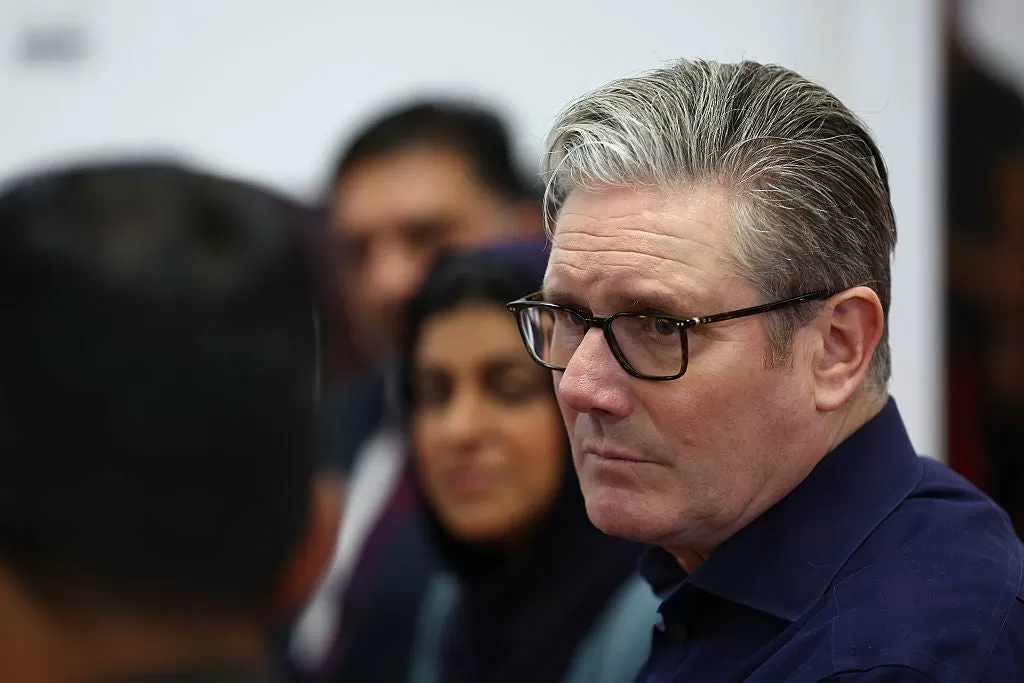
Time is of the essence for Keir Starmer, the current leader of the Labour party. After a series of setbacks and disappointing results, it appears that Starmer’s time as the leader of the opposition may be coming to an end.
The latest blow to Starmer’s leadership came in the form of the Caerphilly by-election, where Labour suffered a crushing defeat at the hands of Plaid Cymru. This marked the end of over a century of Labour dominance in the area, and was seen as a disastrous result for the party.
The mood in the Parliamentary Labour Party (PLP) has been increasingly fraught, with MPs and peers voicing their discontent with Starmer’s leadership. Morgan McSweeney, Starmer’s chief of staff, was sent to face questions from Labour peers, but the meeting did not go well for him or the party. According to one peer present, it was like “a car crash in slow motion.” Another described it as “a really depressing meeting.”
The defeat in Caerphilly has only added to the already-sulphurous mood within the PLP. One senior Labour source described it as an “absolute disaster.” If this had occurred under Jeremy Corbyn’s leadership, the party would be in “absolute meltdown.” One Labour frontbencher summed up the atmosphere among MPs as “toaster-in-the-bath”, and any attempt to blame party staff, the campaign, Welsh Labour, or the candidate would backfire badly.
Many within the party now believe that the blame lies solely with one man – Keir Starmer. There is a growing consensus that his leadership is simply not working and will not lead to success. One veteran peer stated, “It’s not working, it’s not going to work and the sooner he goes, the better.”
While the next round of elections in May 2022 may have been seen as the most likely time for a leadership change, there is now speculation that Starmer may not even make it to the end of this year in Downing Street. MP Wes Streeting, who is seen by many as a potential successor, has been particularly active in recent months, interacting with MPs and doing favors for them. This has led many to view him as a potential PM-in-waiting.
Lucy Powell, one of the MPs recently sacked in the reshuffle, is expected to defeat education secretary Bridget Phillipson to become Labour’s deputy leader when the result is announced on Saturday. This will be interpreted as the party membership passing a scathing verdict on the government’s performance under Starmer.
While there is some hope for Starmer, it may not be enough to keep him in his position. One experienced Labour figure pointed out that the current system for electing leaders and deputy leaders is still in the hands of members, who are not representative of the wider electorate. Therefore, the person most likely to win any leadership election is not necessarily the best candidate to lead the party.
Despite this, it is clear that Starmer’s time as the leader of the Labour party is coming to an end. Whether it will be within the next few months or not remains to be seen, but it is increasingly evident that it is no longer a question of if, but when, Starmer will step down.
Regardless of the timing, it is important for the party to come together and support the next leader in order to move forward. While Starmer’s leadership may not have been successful, it is important to remember that he inherited a difficult situation and faced many challenges. The priority now should be to find a strong, capable leader who can unite the party and offer a clear direction for the future.
The next few months will be crucial for the Labour party, and it is important to approach any leadership change with unity and positivity. The future of the party and the country depends on it.
