


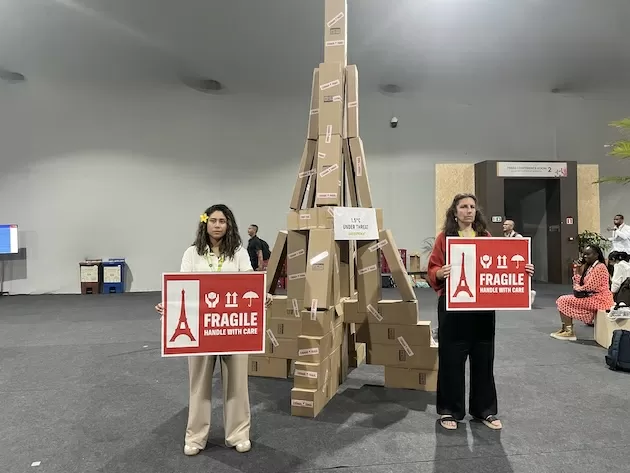
We live in a world that is constantly changing. However, one thing that remains constant is the fact that climate change is real and it is affecting us all. The impacts of climate change are being felt all over the world, but it is the least developed countries that are bearing the brunt of it. And now, as the Chair of the Least Developed Countries Group on Climate Change, Evans Njewa has rightly pointed out, it is time for the wealthy countries to pay the bill.
The recent USD 1.3 trillion roadmap is a step in the right direction, but it is only a starting point. The real test of success lies in the delivery and accountability of these funds. The least developed countries have been struggling to cope with the effects of climate change, and it is time for the developed countries to take responsibility for their actions and provide the necessary support.
It is a well-known fact that the developed countries are responsible for the majority of greenhouse gas emissions. These emissions have led to the rise in global temperatures, resulting in extreme weather events, rising sea levels, and other catastrophic impacts. The least developed countries, on the other hand, have contributed very little to these emissions, yet they are the ones who are facing the consequences.
For too long, the least developed countries have been fighting an uphill battle against climate change with limited resources. They have been forced to divert their already scarce funds towards adaptation and mitigation measures, leaving little for development and poverty reduction. This is not only unfair but also a violation of their basic human rights. The wealthy countries have a moral obligation to support the least developed countries in their fight against climate change.
The USD 1.3 trillion roadmap is a ray of hope for the least developed countries. It includes funds for adaptation, mitigation, and technology transfer, which are crucial for these countries to build resilience and reduce their carbon footprint. However, it is not just about the money. The success of this roadmap also depends on the accountability of the developed countries in delivering these funds and ensuring that they are utilized effectively.
The developed countries must also take into account the specific needs and vulnerabilities of the least developed countries. These countries are already facing the impacts of climate change, and their capacity to adapt and mitigate is limited. Therefore, the funds must be directed towards projects and initiatives that address the unique challenges faced by these countries.
Moreover, the developed countries must also support the least developed countries in building their own capacity to tackle climate change. This includes providing technical assistance, knowledge sharing, and training programs. By empowering the least developed countries, the developed countries can ensure that they are able to take ownership of their own development and contribute to the global efforts to combat climate change.
It is time for the developed countries to take responsibility for their actions and pay the bill for the damage they have caused. The least developed countries should not have to bear the burden of climate change alone. It is a global issue that requires a global solution. The wealthy countries have the resources and technology to address climate change, and it is their responsibility to support the least developed countries in their efforts.
In conclusion, the USD 1.3 trillion roadmap is a step in the right direction, but it is only the beginning. The real challenge lies in the delivery and accountability of these funds. The developed countries must fulfill their commitments and support the least developed countries in their fight against climate change. It is time to act now before it is too late. We did not start this fire, but we are being handed the bill. Let us all work together to ensure a sustainable and prosperous future for all.
