


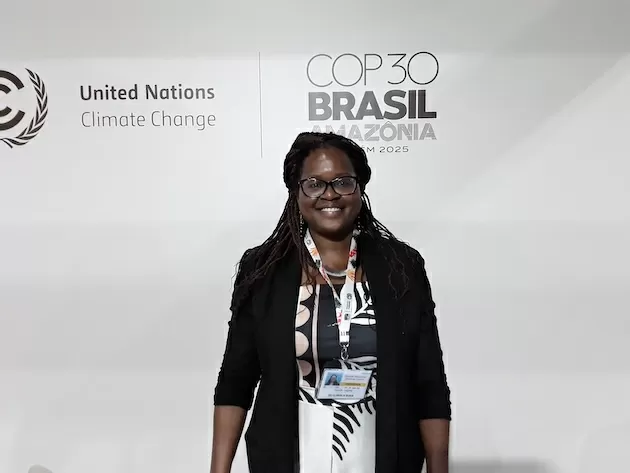
The Conference of Parties (COP) is an annual gathering of world leaders, scientists, and activists who come together to address the pressing issue of climate change. It is a crucial event where decisions are made to protect our planet and secure a sustainable future for all. However, amidst all the technical jargon and negotiations, it is easy to forget the most important aspect of this conference – the people. As Yamide Dagnet, NRDC’s Senior Vice President, International, rightly said, “These processes are all about people. We should never lose our humanity in the process.”
Climate change is not just an environmental issue; it is a humanitarian crisis that affects every single one of us. It is a crisis that knows no borders, no race, and no religion. It is a crisis that threatens the very existence of our planet and all the living beings on it. Therefore, it is imperative that we approach COP not as a battle between negotiators, but as a joint effort of the people, by the people, and for the people.
The COP process can be overwhelming and intimidating for many, with its complex technicalities and high-level discussions. However, it is crucial to remember that at the core of all these discussions and negotiations are real people, whose lives are deeply impacted by the decisions made at COP. These are the people who are already facing the brunt of climate change – the farmers whose crops are destroyed by extreme weather events, the indigenous communities who are forced to leave their homes due to rising sea levels, and the vulnerable communities who lack access to clean water and sanitation.
It is our responsibility as global citizens to ensure that the voices of these people are heard and their needs are addressed at COP. We cannot afford to have a ‘COP of negotiators’ pitted against a ‘COP of the people.’ Instead, we need a ‘COP of the people’ where the concerns and interests of the most vulnerable are given the utmost priority.
The success of COP depends on the participation and engagement of all stakeholders, including governments, civil society organizations, and the private sector. However, the most crucial stakeholder in this process is the general public. It is the people who will ultimately bear the consequences of the decisions made at COP. Therefore, it is essential to involve and engage the public in this process.
We need to create awareness and educate the public about the impact of climate change and the importance of COP. The media has a crucial role to play in this regard, by accurately reporting on the proceedings of COP and highlighting the human stories behind the negotiations. Social media can also be a powerful tool to mobilize and engage the public, especially the youth, who are the most affected by climate change and have the most at stake in this battle.
Moreover, COP should not just be a conference for the elite and the privileged. It should be a conference that represents the diversity of our world and includes the voices of marginalized communities. Efforts should be made to ensure the participation of indigenous peoples, women, youth, and other vulnerable groups in the decision-making process at COP.
COP should also be a platform for collaboration and partnership. It is not enough for governments to make commitments and promises at COP; we need concrete actions and solutions. This can only be achieved through collaboration between different sectors and stakeholders. By working together, we can pool our resources, expertise, and knowledge to find innovative solutions to address the challenges of climate change.
In conclusion, as we gear up for COP, let us not forget that it is a conference of the people, by the people, and for the people. We must never lose our humanity in the process. We must remember that at the heart of all the technicalities and negotiations are real people, whose lives and livelihoods are at stake. Let us approach COP jointly, with a sense of urgency, compassion, and determination to secure a sustainable future for all. Let us make COP a conference that truly represents the people and their interests. Only then can we hope to make a meaningful impact in the fight against climate change.
