


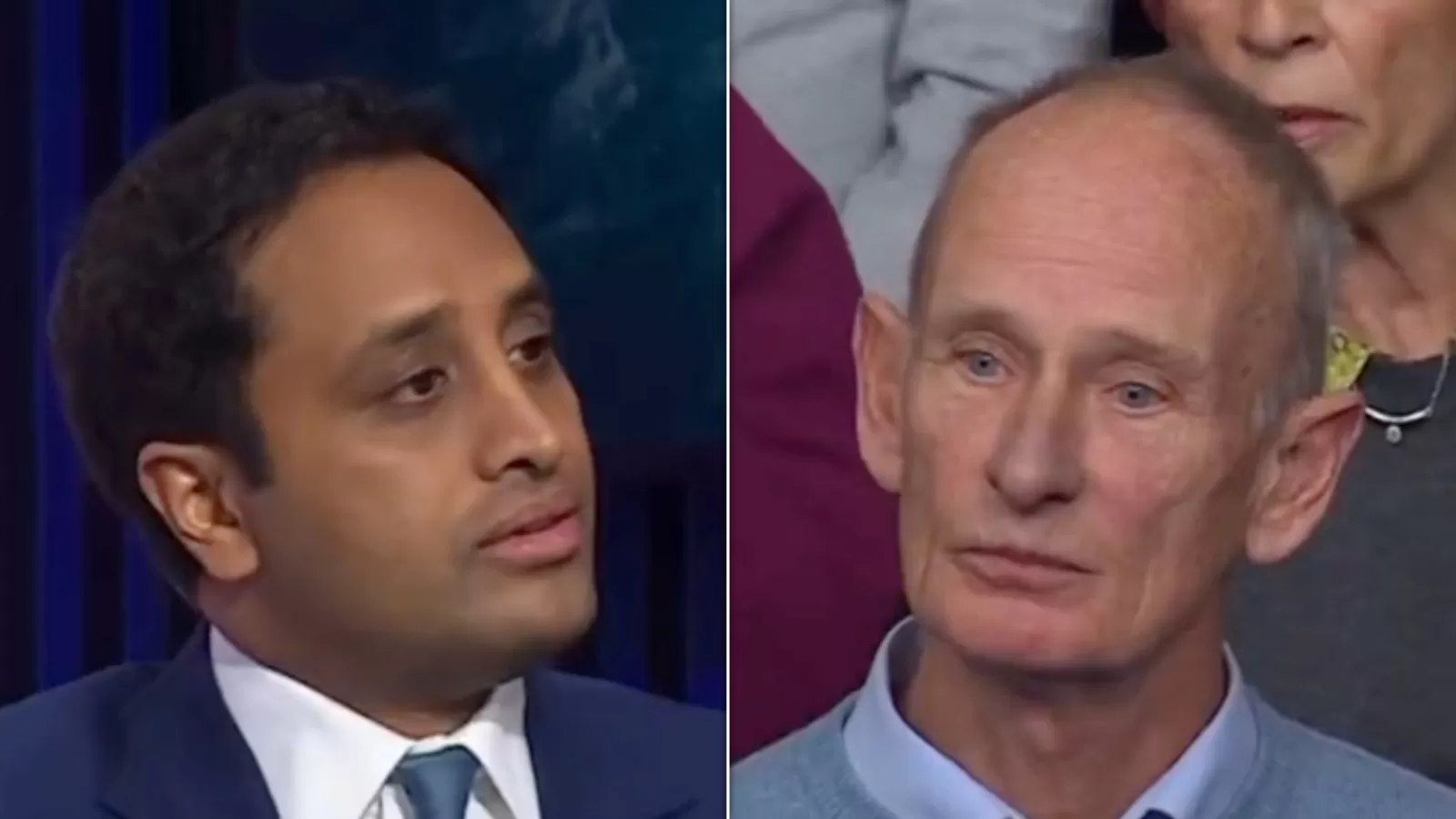
Zia Yusuf, the head of policy for Reform, caused quite a stir on BBC Question Time last Thursday when he clashed with an audience member during an immigration special. The heated exchange left many in the audience surprised and even shocked at Yusuf’s curt response to a question about immigration and the NHS.
The incident occurred when a member of the audience challenged Reform’s stance on immigration, specifically their claim that there are enough people in the UK to not need foreign doctors. The man, who identified himself as a former NHS student, pointed out that the healthcare sector is heavily reliant on doctors and care workers from abroad, despite nine million people in the UK being unemployed.
He also highlighted the fact that population growth and a shortage of funds for hospitals have contributed to the need for foreign workers. He then turned to Yusuf and accused him of conflating different issues to make his argument. The man also brought up Reform’s promise to revoke indefinite leave to remain for migrant workers if they were to come into power.
He asked Yusuf, “So if you’ve worked as a care worker in a nursing home for 40 years, you are already not allowed to bring your children over. And when you turn 65, you’ll be sent back to where you came from. Is that what you’re suggesting?”
Yusuf’s response was met with a surprised “ooh” from the audience, but he continued to defend his party’s stance. He denied the man’s accusations and stated that if he had paid attention to what Reform was announcing, he would not have that view.
However, the tension escalated when migration minister Mike Tapp chimed in and accused Yusuf of being rude. He urged him to be polite to people, to which Yusuf ignored and continued to explain Reform’s plans for an “acute skills shortage visa” for sectors like the care home sector.
The incident did not end there, as Yusuf later criticized the BBC for supposedly “planting” small boat migrants in the audience. In an interview with GB News, he expressed his bewilderment at the idea of allowing people who have entered the country illegally to have a seat at the table in a discussion about illegal immigration.
Yusuf stated, “How on earth is it deemed appropriate that people who have broken into this country illegally should have a seat at the table in a discussion about illegal immigration? It is bewildering.”
The clash between Yusuf and the audience member has caused quite a stir on social media, with many expressing their shock and disappointment at Yusuf’s response. Some have even accused him of being dismissive and lacking empathy towards the issue of immigration.
This is not the first time Yusuf has been involved in a heated exchange on a political talk show. In the past, he has clashed with LBC presenter James O’Brien over Nigel Farage’s controversial comments on Putin and Ukraine. He has also been criticized for refusing to acknowledge Farage’s divisive past comments as a mistake.
Despite the backlash, Yusuf remains firm in his beliefs and continues to defend Reform’s policies. In a recent interview, he stated that the party’s aim is to have a “fair and controlled immigration system” that benefits both the UK and migrants.
The incident on BBC Question Time has once again brought the issue of immigration to the forefront of political discussions. It has also highlighted the need for respectful and constructive dialogue when discussing sensitive topics like immigration.
In a time where immigration is a hotly debated topic, it is important for politicians and individuals to approach the issue with empathy and understanding. The clash between Zia Yusuf and the audience member serves as a reminder that respectful and open communication is crucial in finding solutions to complex issues like immigration.
As for Yusuf, it is clear that he is a passionate and determined individual who stands by his beliefs. While his response may have been seen as curt and dismissive by some, it is important to remember that everyone is entitled to their own opinions and should be given the opportunity to express them without fear of judgement or ridicule.
In the end, it is through respectful and open dialogue that we can work towards finding solutions that benefit everyone. Let us hope that in the future, discussions about immigration can be held in a more respectful and productive manner.
