


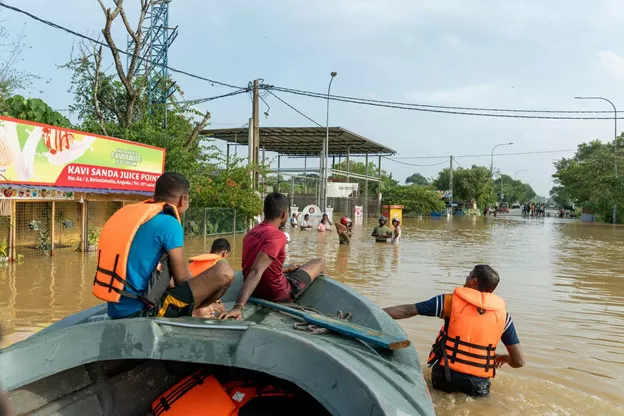
In late November, the tropical cyclone Ditwah made landfall in Sri Lanka and southern India, leaving a trail of destruction in its wake. The storm brought heavy rainfall that triggered widespread flooding and devastating landslides, causing extensive damage to civilian infrastructure and resulting in a significant loss of life. The impact of this natural disaster has been felt by communities across the affected regions, with limited access to essential services and humanitarian agencies facing numerous challenges in providing aid.
The cyclone, with wind speeds of up to 120 km/h, made landfall in Sri Lanka on November 25th, causing widespread damage to homes, buildings, and roads. The heavy rainfall that accompanied the storm caused rivers to overflow, leading to severe flooding in many areas. The southern and central regions of the country were the most affected, with reports of landslides and flash floods causing significant damage to infrastructure and displacing thousands of people from their homes.
Neighboring country India was also not spared from the wrath of Cyclone Ditwah. The storm hit the southern states of Tamil Nadu and Kerala, causing widespread damage and disruption. The heavy rainfall and strong winds led to flooding and landslides in many areas, leaving communities in a state of shock and devastation.
The impact of Cyclone Ditwah has been felt not only in terms of physical damage but also in terms of loss of life. The latest reports indicate that the storm has claimed the lives of over 100 people in Sri Lanka and India combined, with many more still missing. The loss of lives is truly heartbreaking and has left families and communities grieving for their loved ones.
The aftermath of the cyclone has been challenging for the affected communities, with limited access to essential services such as clean water, food, and medical care. The destruction of roads and bridges has made it difficult for aid to reach the most affected areas, leaving many communities isolated and in urgent need of assistance. The humanitarian agencies on the ground are working tirelessly to provide aid and support to those in need, but they face numerous challenges in their efforts.
Despite the devastation caused by Cyclone Ditwah, there is a glimmer of hope in the midst of the chaos. The spirit of resilience and unity among the affected communities is truly inspiring. People have come together to help each other, providing shelter, food, and support to those in need. The government and various organizations have also stepped up their efforts to provide aid and help rebuild the affected areas.
The road to recovery will be long and challenging, but the affected communities are not alone in this journey. The international community has also come forward to provide support and assistance in the aftermath of Cyclone Ditwah. The outpouring of love, compassion, and generosity from people all around the world is a testament to the human spirit and its ability to overcome even the most difficult of challenges.
As we move forward from this natural disaster, it is important to remember the lessons learned. Climate change is real, and we must take action to mitigate its effects. We must also be prepared for future disasters and have systems in place to respond effectively and efficiently. Together, we can build more resilient communities and reduce the impact of such disasters in the future.
In conclusion, the devastation caused by Cyclone Ditwah in Sri Lanka and southern India is a reminder of the power and unpredictability of nature. The storm has left a trail of destruction and loss, but it has also brought people together and shown the strength of the human spirit. As we work towards recovery and rebuilding, let us also remember to take care of our planet and each other. Let us stand in solidarity with the affected communities and support them in any way we can. Together, we can overcome this disaster and emerge stronger and more united than ever before.
