


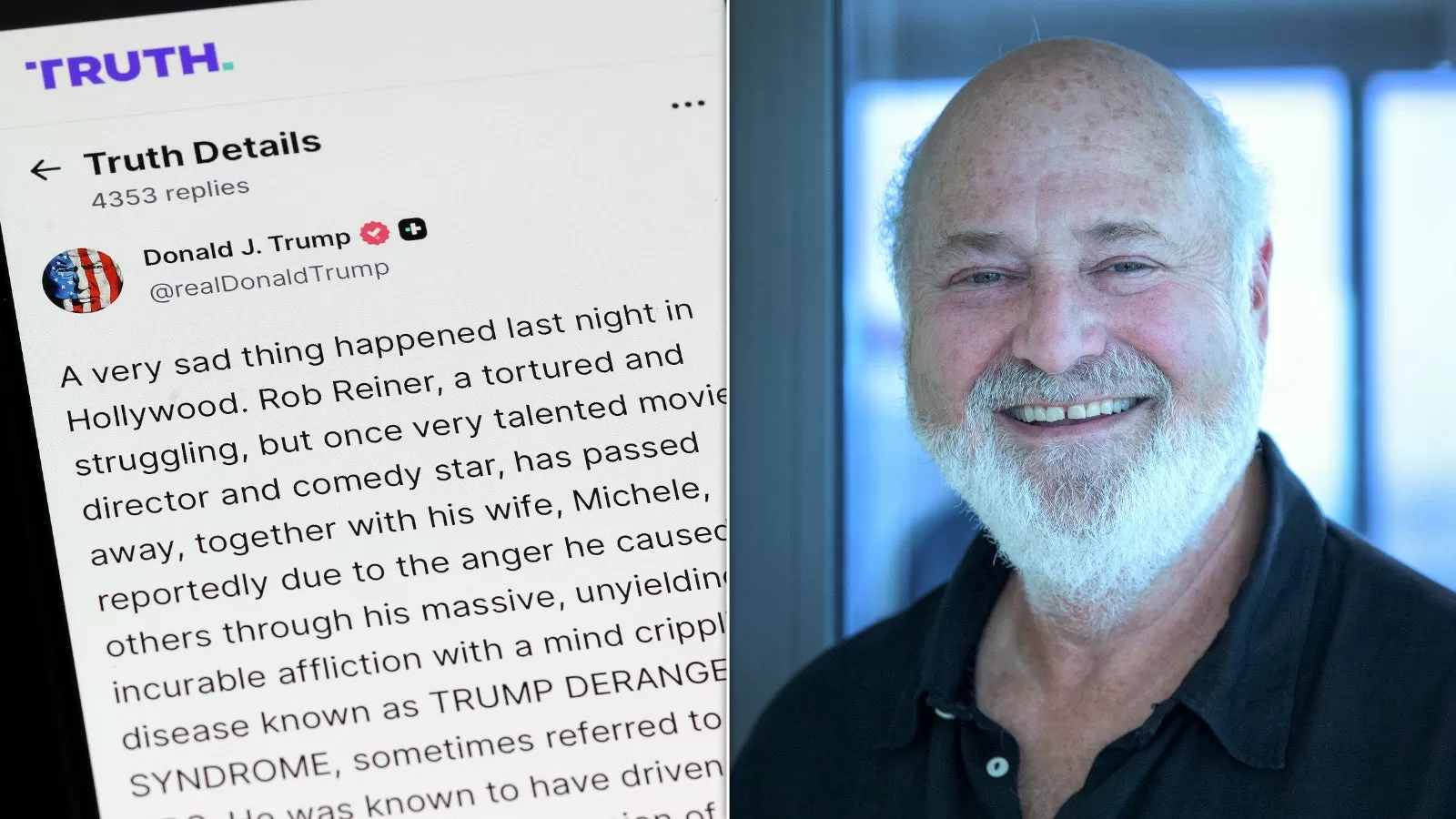
In the wake of the tragic deaths of Rob and Michele Reiner, the internet was flooded with an outpouring of grief and support for the family. However, on Truth Social, the posting platform of choice for former President Donald Trump, the tone was drastically different.
In a post on Monday night, Trump wrote, “A very sad thing happened last night in Hollywood. Rob Reiner, a once talented movie director and comedy star, has passed away, along with his wife Michele. It is reported that their deaths were caused by Rob’s unyielding and incurable affliction with a mind crippling disease known as TRUMP DERANGEMENT SYNDROME, sometimes referred to as TDS.”
This insensitive and offensive post not only insults the victims of a domestic violence-related crime, but also manages to make the tragedy about Trump’s own victimhood. It is a prime example of the political hostility that has become all too common in today’s society.
Even some of Trump’s own supporters spoke out against his post, calling it “heartless and uncalled for” and “unnecessary” to attack Reiner in such a moment. Yet, despite the backlash, the post still received thousands of reposts and likes. This raises the question: how did we get to a point where such behavior is not only accepted, but also celebrated?
According to experts, Trump’s post is a reflection of his destructive narcissism and malevolent personality traits. He has a tendency to make everything about himself, even in the face of a tragedy. This behavior is not surprising, but it is concerning, as it sets a dangerous precedent for how we treat and communicate with one another.
Psychologists also point to the psychology of victim blaming as a possible explanation for Trump’s post. It is common for people to search for a reason to blame the victim in the aftermath of a tragedy, as it satisfies their need for control and aligns with their belief in a just world. However, this does not excuse the behavior.
The nature of online communication also plays a role in how easily we can dehumanize one another. The anonymity and distance of the internet can make it easier for people to inflict harm without facing the consequences of their actions. This, coupled with the normalization of such behavior, has led to a society where cruelty and hate are rampant.
But this is not just a problem with Trump or his supporters. It is a larger issue of extreme in-group versus out-group dynamics that have become increasingly prevalent in our society. People are more likely to empathize with and defend members of their own group, while dehumanizing and attacking those in the out-group. This is further reinforced by the information ecosystems we subscribe to, which only serve to reinforce our biases.
It is important to note that this behavior is not limited to one side or the other. However, the Republican Party under Trump has adopted a more extremist and divisive tone, making it difficult to place equal blame on both sides. When the leader of a party engages in such behavior, it sets a dangerous precedent for their followers to do the same.
So, how do we move forward and live with one another in a society that is increasingly polarized and hostile? It starts with recognizing our shared values as Americans and challenging the algorithms that feed us divisive and hateful content. We must also remember that the most vocal and extreme voices do not represent the majority of people on either side.
It is also important to have leaders who set the tone of civility and respect from the top down. When political leaders engage in divisive and hateful rhetoric, it sends a signal to their followers that it is acceptable to do the same. This can have dangerous consequences, as seen in the rise of political violence in recent years.
In the end, it is up to each of us to resist the temptation to dehumanize and attack those who hold different beliefs. We must strive to find common ground and work towards a more cooperative and empathetic society. It may not be easy, but it is necessary if we want to live in a world where tragedies are not used as political ammunition and where empathy and understanding prevail.
