


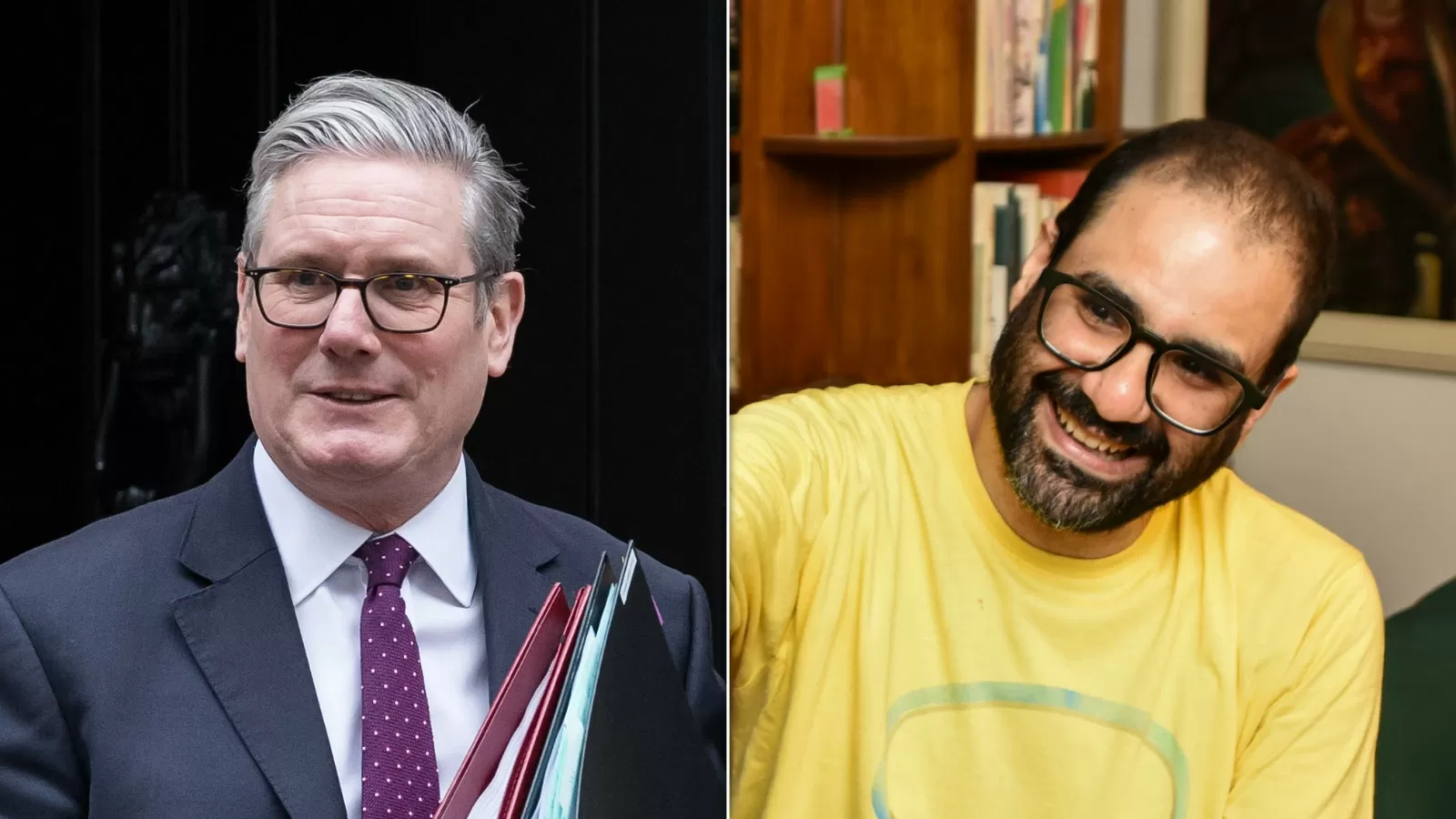
Keir Starmer and Alaa Abd El-Fattah: A Defining Moment for the Government
The name Alaa Abd El-Fattah has been making headlines for years now as successive British governments have tried to secure his freedom. The pro-democracy activist was detained in Egypt and sentenced to five years behind bars in 2021, accused of “spreading fake news”. However, the UN later declared his arrest to be unlawful. As a British-Egyptian dual national, both the Conservatives and Labour made efforts to lobby for his release.
So it was a moment of great pride for Keir Starmer when he announced on Boxing Day that El-Fattah had finally been released and was back in the UK. However, this joy was short-lived as it soon emerged that El-Fattah had a history of posting offensive tweets, including calls for violence against Zionists and the police.
This revelation sparked a backlash from the Conservatives and Reform UK, who called for the government to revoke El-Fattah’s citizenship. Tory shadow home secretary Chris Philp even went as far as calling him a “scumbag”. In response, El-Fattah quickly issued an “unequivocal” apology for his past tweets, acknowledging that they were “shocking and hurtful”. He explained that they were mostly expressions of a young man’s anger and frustration during a time of regional crises in the Middle East.
No.10 welcomed El-Fattah’s apology, admitting that his social media posts were “abhorrent”. However, they also emphasized that they still welcomed the return of a British citizen who had been unfairly detained abroad. But just hours later, the Foreign Office announced that they were looking into how officials had been “unaware” of El-Fattah’s offensive tweets, some of which dated back to 2010.
Foreign Secretary Yvette Cooper wrote to MPs, admitting that the long-standing procedures and due diligence arrangements had been “completely inadequate” in this case. She also expressed deep concern that the sudden emergence of these historical tweets and the government ministers’ own posts welcoming El-Fattah had caused distress to the Jewish community.
While a review into these “serious information failures” may quieten some of the temporary backlash around this particular case, it speaks to a wider communication problem within the government. This is just the latest in a series of flip-flops and U-turns that have plagued the government in recent months. Critics have slammed it as a moment that perfectly captures the government’s incompetence.
This incident adds to a growing list of major policy U-turns, including inheritance tax for family farms, the two-child benefit cap, and welfare cuts. These have all contributed to a steep decline in the polls for Labour, just 18 months after their landslide victory.
The topic of citizenship is particularly divisive right now, with a new YouGov poll showing that twice as many Brits (36% compared to 19%) now believe that birthplace is key to being a UK citizen compared to two years ago. The backlash over asylum hotels reached new heights in the summer, with far-right protests taking place.
Meanwhile, opposition politicians are calling for the government to withdraw from the European Convention on Human Rights (ECHR) to crack down on small boat crossings, amid rising anti-immigration sentiment. While Labour is only pushing for reforms to the ECHR at the moment, Home Secretary Shabana Mahmood has already introduced sweeping changes to the asylum system, including making refugee status temporary.
As Luke Tryl, chief of More in Common, wrote in an article, this incident could “become a defining moment” for the government. He warned that it risks “crystallising” arguments that the government “simply isn’t competent enough to be in control or, more than that, has badly out of line priorities”.
With mounting challenges for Labour as they head into 2026, the government’s opponents can be expected to continue pressing this matter for some time to come. This incident highlights the need for better communication and due diligence within the government, as well as the importance of addressing divisive issues such as citizenship and immigration. It is a moment that could have far-reaching consequences for the government and the country as a whole.
