


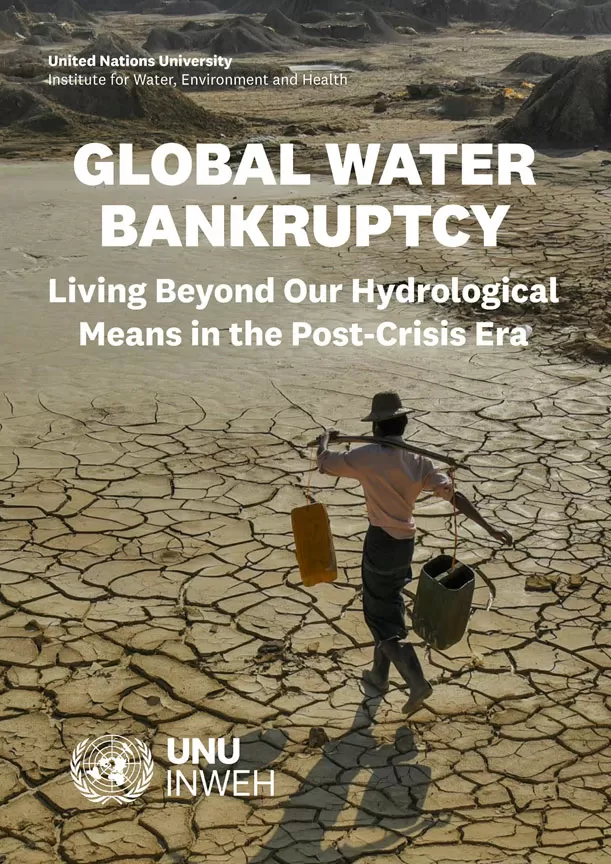
The world is facing a crisis that is often overlooked and underestimated – water bankruptcy. This term refers to the state of a basin or aquifer where the demand for water exceeds the available supply, leading to long-term overuse and degradation. This means that the past hydrological and ecological baselines cannot realistically be restored, leaving us in a dire situation.
While not every basin or country is water-bankrupt, enough critical systems around the world have crossed these thresholds. And the consequences of this are not limited to just those areas. The interconnectedness of our world through trade, migration, and climate means that the effects of water bankruptcy are felt far beyond its origin.
The root cause of water bankruptcy is the unsustainable use of water resources. As the global population continues to grow, so does the demand for water. Agriculture, industry, and domestic use all require vast amounts of water, and in many cases, this demand is not being managed effectively. This has led to the depletion of groundwater reserves, the drying up of rivers and lakes, and the degradation of water quality.
One of the most alarming aspects of water bankruptcy is that it is not just a problem for developing countries. Developed nations, with their advanced infrastructure and technology, are also facing this crisis. In fact, some of the most water-stressed regions in the world are in developed countries such as the United States, Australia, and parts of Europe. This highlights the fact that water bankruptcy is not just a problem for the poor, but a global issue that requires urgent attention.
The consequences of water bankruptcy are far-reaching and devastating. It not only affects the availability of drinking water, but also has a significant impact on food production, energy generation, and overall economic development. In many cases, it also leads to conflicts over water resources, exacerbating existing political and social tensions.
But all hope is not lost. There are solutions to address the issue of water bankruptcy, and it is imperative that we act now before it’s too late. The first step is to acknowledge the severity of the problem and raise awareness about it. Many people are still unaware of the looming water crisis, and it is our responsibility to educate ourselves and others about it.
Governments and policymakers must also take action to manage water resources more sustainably. This includes implementing efficient irrigation techniques in agriculture, promoting water conservation in industries, and investing in infrastructure to improve water management. It is also crucial to involve local communities in decision-making processes and empower them to take ownership of their water resources.
Individuals can also play a significant role in addressing water bankruptcy. Simple actions like reducing water usage at home, fixing leaks, and being mindful of our water consumption can make a big difference. We must also support and advocate for policies and initiatives that promote sustainable water management.
Furthermore, we must recognize the interconnectedness of our world and the impact of our actions on others. This means being mindful of the products we consume and their water footprint. For example, it takes 15,415 liters of water to produce one kilogram of beef, while it only takes 1,847 liters to produce one kilogram of wheat. By making conscious choices, we can reduce our water footprint and contribute to a more sustainable future.
In conclusion, the world is already in a state of water bankruptcy, and the consequences of this crisis are far-reaching. But it is not too late to take action. By acknowledging the severity of the problem, implementing sustainable water management practices, and making conscious choices, we can work towards a more water-secure future. Let us not wait until it’s too late. The time to act is now.
