


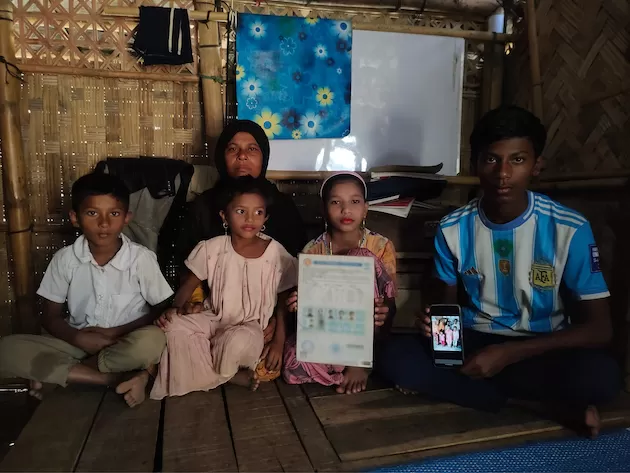
Dawn is breaking and as the sun rises, the world’s biggest refugee camp comes to life. Amongst the rows of bamboo and tarpaulin shelters, smoke rises from small cooking fires and children line up for food. This is Cox’s Bazar in Bangladesh, home to over 1.1 million Rohingya refugees. And amongst them is 38-year-old Mon Bahar, who has been living here for the past two years.
Mon Bahar’s story is just one of the many that make up the sprawling network of camps in Cox’s Bazar. The Rohingya people, a Muslim minority group from Myanmar, have been fleeing persecution and violence in their home country for decades. But in August 2017, the situation reached a tipping point when a military crackdown forced over 700,000 Rohingya to flee to neighboring Bangladesh. Mon Bahar and her family were among them.
Life in the refugee camps is far from easy. Mon Bahar and her husband, along with their four children, live in a small shelter made of bamboo and tarpaulin. It is cramped and uncomfortable, but it is the only home they have. Despite the challenges, Mon Bahar remains positive and determined to make the best of her situation.
Every day, she wakes up before dawn to start her day. She collects water from a nearby well and prepares breakfast for her family on a small fire. Then, she gets her children ready for school. Despite the limited resources and facilities, Mon Bahar is determined to provide her children with an education. She believes that education is the key to a better future for her family.
After dropping her children off at school, Mon Bahar heads to the community center where she volunteers as a teacher. She teaches basic literacy and numeracy skills to the children in the camp. It is her way of giving back to the community and helping the younger generation. Despite the hardships she has faced, Mon Bahar remains determined to make a positive impact in the lives of those around her.
The refugee camps in Cox’s Bazar are a testament to the resilience and strength of the human spirit. Despite the desperate living conditions and lack of basic necessities, the Rohingya refugees have created a sense of community and camaraderie in the camps. They have built makeshift schools, mosques, and markets, and have even started small businesses to support themselves.
But life in the camps is not without its challenges. The monsoon season brings heavy rains and strong winds, which can cause flooding and damage to the shelters. The lack of proper sanitation and hygiene also poses a threat to the health and well-being of the refugees, especially children. The overcrowded living conditions also make it difficult for social distancing, putting the refugees at risk during the current COVID-19 pandemic.
Despite these challenges, the Rohingya refugees in Cox’s Bazar remain resilient and hopeful. They have not lost their sense of community and continue to support each other in any way they can. The international community has also come together to provide aid and support to the refugees, but more help is needed to ensure their well-being and safety.
As the day comes to an end, Mon Bahar returns to her shelter, tired but content. She knows that tomorrow will bring its own set of challenges, but she is determined to face them with strength and hope. The world’s biggest refugee camp may be a place of hardship, but it is also a place of resilience, determination, and hope. And as the sun sets over Cox’s Bazar, the refugees continue to hold on to that hope, knowing that one day, they will be able to return to their homeland and live in peace.
