


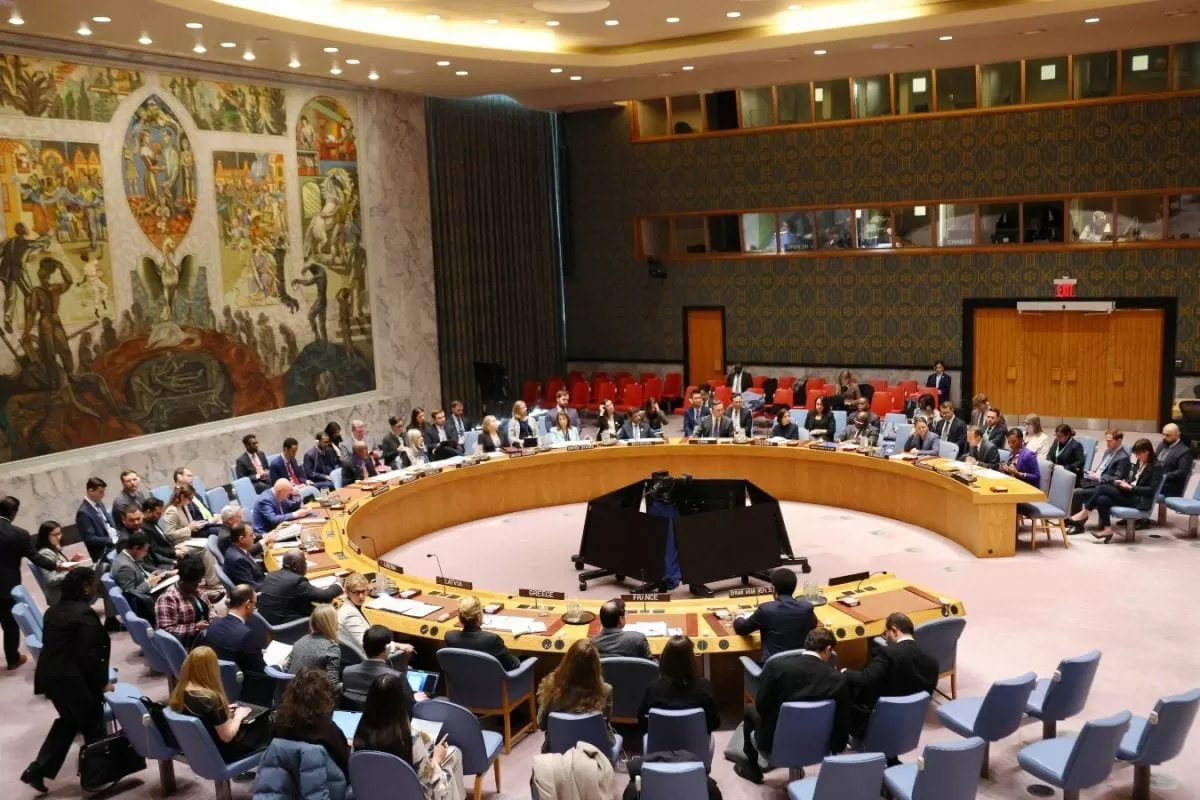
India has always been a strong advocate for peace and diplomacy in the international community. The recent decision of India to abstain from a resolution introduced by Kyiv at the United Nations is a testament to India’s commitment towards maintaining global harmony.
The resolution, which was introduced by Kyiv, called for the implementation of certain measures to address the ongoing political and humanitarian crisis in their country. It received support from 75 countries, while 51 countries, including India, chose to abstain from voting.
In a statement released by the Ministry of External Affairs, India clarified its decision to abstain from voting, stating that while they were deeply concerned about the situation in Kyiv, they believed that the resolution did not adequately address the root causes of the crisis and lacked a comprehensive approach.
India’s decision to abstain from the resolution has received both praise and criticism from various quarters. Some have lauded India for taking a principled stand and not succumbing to external pressure, while others have questioned India’s silence on the issue.
However, it is important to understand the reasons behind India’s decision. India has always believed in non-interference in the internal affairs of other countries and has maintained a policy of neutrality in such matters. This stance is in line with India’s longstanding tradition of respecting the sovereignty and territorial integrity of other nations.
Moreover, India has a strong historical and cultural connection with Kyiv. The two countries have shared a friendly relationship for decades, and India has been a consistent supporter of Kyiv’s territorial integrity. Therefore, India’s decision to abstain from the resolution should not be misinterpreted as a lack of support for Kyiv.
It is also worth noting that India has been at the forefront of providing humanitarian aid and assistance to Kyiv during these difficult times. India has sent medical supplies and other essential items to help the people of Kyiv cope with the crisis. This further highlights India’s commitment towards standing by its friends in times of need.
India’s abstention from voting should also be seen in the context of its larger foreign policy goals. India is currently focusing on building strong diplomatic ties with countries across the globe, and this decision is a reflection of India’s efforts to maintain cordial relations with all nations.
Furthermore, India has always emphasized the importance of dialogue and peaceful resolution of conflicts. India believes that only through constructive engagement and dialogue can long-term solutions be achieved, and this is precisely what India is striving for in the case of Kyiv.
India’s decision to abstain from the resolution should be seen as a step towards finding a lasting and sustainable solution to the crisis in Kyiv. It is a clear indication of India’s commitment to promoting peace and stability in the region.
In conclusion, India’s abstention from the resolution introduced by Kyiv at the United Nations is a well-thought-out decision that is in line with India’s foreign policy principles. India remains committed to playing a constructive and positive role in promoting peace and stability in the world. Let us hope that all nations will work together towards finding a lasting solution to the crisis in Kyiv, and that peace and prosperity will prevail in the region.
