Bank of England's Cautious Stance May Extend Higher Rates
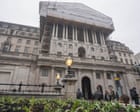
Central Bank's Conservative Approach Under Scrutiny
The Bank of England interest rates decision has drawn significant criticism from prominent economic research institutions, with experts warning that overly cautious monetary policy adjustments may result in prolonged periods of elevated interest rates across the United Kingdom economy. The National Institute of Economic and Social Research (Niesr), a leading independent economic thinktank, has issued a comprehensive assessment questioning the effectiveness of recent central bank strategies in combating persistent inflationary pressures.
According to Niesr's latest analysis, the modest rate adjustment implemented by the Bank of England last week represents a potentially inadequate response to the mounting inflation challenge facing the nation. This conservative approach, the thinktank argues, could ultimately necessitate more aggressive monetary tightening measures in the coming months and years, contrary to the central bank's apparent intention to minimize market disruption.
Inflation Projections Remain Concerning
The economic research organization has raised alarm bells regarding long-term inflation forecasts, suggesting that current Bank of England interest rates policy may fail to bring price pressures back toward the 2% target within an acceptable timeframe. Niesr's projections indicate that without more decisive action, inflation could remain elevated and persistent as a characteristic feature of the UK economy through at least 2030, representing a considerably extended timeline for price stabilization.
This grim outlook challenges the central bank's messaging that measured, gradual adjustments represent the optimal path forward. The thinktank contends that the hesitancy demonstrated in recent policy decisions risks embedding inflation expectations deeper within the economy, making subsequent efforts to achieve stability exponentially more difficult and costly.
The Case for Stronger Monetary Action
Niesr's critique emphasizes that timid policy responses to inflationary shocks typically produce counterproductive outcomes. When central banks fail to demonstrate sufficient commitment to price stability through concrete rate adjustments, market participants and wage-setters adjust their expectations accordingly, anticipating continued elevated inflation regardless of official target statements. This psychological dimension amplifies the challenge of eventually restoring price control.
The thinktank's position reflects broader economic theory suggesting that credibility in monetary policy requires visible, proportionate action. By delaying or minimizing rate increases, the Bank of England interest rates regime may inadvertently signal uncertainty about its inflation-fighting resolve, potentially encouraging businesses and workers to demand higher prices and wages as protective measures against anticipated future price rises.
Long-Term Economic Consequences
The extended timeline for returning to the 2% target carries substantial implications for household finances, business investment, and overall economic competitiveness. Prolonged periods of higher interest rates increase borrowing costs across mortgages, commercial loans, and consumer credit, creating headwinds for economic growth and employment. Companies facing elevated financing costs may defer expansion plans or reduce hiring, while households struggle with higher debt servicing obligations.
Niesr's analysis suggests that the current cautious approach may ultimately prove more economically damaging than a more decisive initial response would have been. Rather than preventing pain, conservative rate adjustments may simply postpone and amplify the eventual correction required, much like applying a weak remedy to a serious infection that subsequently requires stronger intervention.
Policy Implications and Future Outlook
The thinktank's assessment carries important implications for how observers and market participants evaluate future Bank of England interest rates decisions. If Niesr's projections prove accurate, policymakers may face mounting pressure to acknowledge the insufficiency of current measures and implement more substantial adjustments in coming policy meetings. Such a reversal could trigger market volatility and undermine confidence in the central bank's forward guidance.
Economic stakeholders, including businesses, savers, and borrowers, will be closely monitoring subsequent inflation data and monetary policy announcements to determine whether the Bank of England demonstrates greater resolve in future actions or continues its measured approach. The resolution of this tension between caution and necessity will significantly shape economic outcomes across the UK throughout the remainder of this decade and beyond.