Burnham Attributes UK's Economic Stagnation to Brexit and Thatcher
Burnham's Critique of UK Political Direction
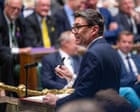
Prime Minister Andy Burnham has pointed to Brexit and Margaret Thatcher's legacy as contributing factors to sustained economic underperformance in the United Kingdom. During his inaugural appearance in Parliament since assuming office approximately six weeks ago, Burnham emphasized the necessity for the nation to conduct a thorough and candid examination of the policy decisions that have shaped the past four decades of British politics.
The premier articulated his vision for reversing what he characterized as a succession of detrimental policy choices, stating that such critical self-assessment is essential if Britain is to establish renewed confidence and achieve improved economic outcomes. His remarks underscore a broader governmental strategy to frame current challenges within a historical context that extends beyond the tenure of recent administrations.
Defence Spending Commitments and Military Strategy
Burnham communicated his intention to elevate military expenditure to three percent of gross domestic product by 2030, signaling a strengthened commitment to national defence capabilities. The appointment of John Healey to the position of chancellor reflected this strategic priority, with Burnham explicitly noting that Healey's established views on military investment were instrumental in his selection for this senior cabinet role.
This defence spending trajectory aligns with NATO commitments and represents a significant financial commitment from the Treasury. The government's approach demonstrates a recognition of evolving geopolitical circumstances and the corresponding need for enhanced defence infrastructure and capabilities.
Water Sector Reforms and Privatisation Reconsideration
In addressing environmental and infrastructure concerns, Burnham indicated openness toward examining the potential renationalization of the water industry. The prime minister characterized the current privatized water sector as a "leaking monument" to the inadequacies of privatization policy implemented decades earlier.
The government is reportedly evaluating comprehensive options to address persistent challenges within the water industry, including aging infrastructure, service delivery failures, and environmental protection deficiencies. This reassessment of the privatization model reflects growing political and public pressure regarding essential service delivery standards and environmental stewardship responsibilities.
Electoral System and Democratic Participation
Burnham indicated a willingness to reconsider the nation's electoral framework, suggesting that Labour's forthcoming manifesto may include provisions for electoral reform measures. However, he emphasized that implementing such constitutional changes would require substantial parliamentary consensus and public mandate secured during a general election.
The prime minister acknowledged the existence of diverse perspectives regarding electoral reform within Parliament while maintaining his conviction that democratic agreement on such fundamental institutional changes must be achieved transparently through the electoral process. This measured approach reflects the complexity of implementing systemic political reform within established constitutional frameworks.
Energy Policy and Climate Commitments
The government has reaffirmed its dedication to pursuing renewable energy development and participating in international climate initiatives. Burnham confirmed his attendance at the forthcoming Cop31 climate summit scheduled to convene in Turkey, demonstrating continued engagement with global environmental efforts.
Simultaneously, the prime minister adopted what he characterized as a pragmatic stance regarding energy supply diversification. Rather than presenting renewable and conventional energy sources as mutually exclusive options, Burnham argued that comprehensive energy security requires simultaneous development of multiple energy sources. This pragmatic positioning suggests the government may approve the Jackdaw gasfield project whilst maintaining climate transition objectives.
The premier contended that political rhetoric often creates false dichotomies between environmental protection and energy security, whereas practical governance demands pursuing both objectives concurrently. This balanced approach aims to address legitimate concerns regarding energy costs, supply reliability, and carbon reduction targets simultaneously.
Vision for National Renewal and Economic Optimism
The overarching theme of Burnham's parliamentary address centered on establishing renewed optimism and confidence within the British electorate. The prime minister articulated his ambition to transform the current decade into a period of genuine progress and improvement following years of limited economic growth and political turbulence.
By attributing historical underperformance to specific policy decisions and ideological approaches, Burnham positioned his administration as fundamentally different from its predecessors. The government's multi-faceted policy announcements across defence, infrastructure, energy, and electoral reform reflect an attempt to project comprehensive change and renewed purpose in addressing longstanding national challenges and contemporary policy priorities.