
Canadian Wildfire Evacuees Face Uncertain Future Amid Mass Exodus
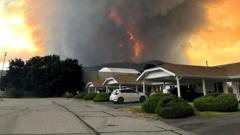
Mass Evacuation Grips Canada's Okanagan Region
A devastating wildfire has forced more than 12,000 residents to flee their homes in Canada's Okanagan region, leaving Canadian wildfire evacuees in a state of profound uncertainty about their properties and futures. The rapidly spreading fire has consumed significant portions of the picturesque valley, destroying homes and threatening the livelihoods of thousands of families who have called this area home for generations.
The scale of displacement represents one of the most significant emergency evacuations in the region's recent history. Authorities issued mandatory evacuation orders affecting residential communities across multiple zones, with residents given limited time to gather their belongings and leave their homes behind.
Widespread Property Damage and Losses
Initial reports indicate that numerous residences have been consumed by the flames, though officials are still assessing the full extent of the damage across affected areas. Evacuated residents describe harrowing escapes and uncertain circumstances, with many expressing deep concern about whether their properties will still stand when they eventually return.
The destruction has extended beyond residential areas, affecting local businesses, infrastructure, and natural landscapes that define the region's character. Communities that have thrived in the Okanagan are now grappling with the reality of catastrophic loss.
Resident Accounts and Emotional Impact
Many evacuees have described experiencing numerous frightening moments during the evacuation process. Residents report seeing flames approach their neighborhoods and communities, creating scenarios they describe as "close calls" where their homes and safety hung in the balance. The psychological toll on families forced to abandon their properties is substantial.
Interviews with displaced residents reveal a common thread: uncertainty about what awaits them when they can return. Some evacuees have received preliminary information suggesting their homes survived the initial fire perimeter, while others remain completely in the dark about their properties' status.
Emergency Response and Support Operations
Provincial and federal emergency services have mobilized comprehensively to manage the evacuation and provide support to displaced residents. Evacuation centers have been established in nearby communities to accommodate those who have nowhere else to go. Authorities continue working to maintain order and provide essential services during this ongoing crisis.
Firefighting crews work around the clock to contain the blaze and prevent further spread. Resources have been deployed from across the province and beyond, with aerial firefighting operations supplementing ground crews' efforts.
Recovery and Long-term Outlook
As the wildfire situation continues to develop, attention is turning toward recovery planning and support mechanisms for affected residents. Government agencies have announced preliminary assistance programs, though details about compensation and rebuilding support remain limited.
The Canadian wildfire evacuees now face weeks or potentially months of uncertainty as evacuation orders remain in effect. Insurance claims will undoubtedly become a major concern for homeowners seeking to rebuild their lives in the aftermath of this disaster.
Regional Impact Beyond Immediate Evacuation
The wildfire extends its effects throughout the broader Okanagan community. Local schools have suspended operations, businesses have closed, and the regional economy faces significant disruption. Agricultural operations in the area, which depend heavily on seasonal workers and stable conditions, confront serious challenges.
Air quality throughout the region has deteriorated considerably due to smoke from the active fire. Residents across the Okanagan are advised to remain indoors when possible and take precautions to protect their respiratory health.
The situation underscores the increasing vulnerability of communities in wildfire-prone regions and the need for enhanced preparedness planning. As climate conditions create conditions favorable for more frequent and intense wildfires, the protection of residential areas and the safety of residents remain paramount concerns for regional planners and emergency management officials.


