
David Hockney Laid to Rest in Private Ceremony
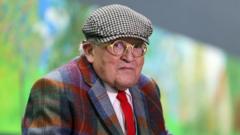
Legendary British Artist David Hockney Remembered in Intimate Service
The passing of David Hockney marked the end of an extraordinary era in contemporary art, with the revered British painter and printmaker honored through a deeply personal and understated farewell. A private David Hockney funeral was conducted at his London home in accordance with his express wishes, reflecting the artist's lifelong preference for privacy despite his towering influence on modern visual culture.
The distinguished figure in twentieth-century art departed from his residence in the British capital during the opening days of the month, leaving behind a legacy that fundamentally reshaped international artistic discourse. Rather than orchestrating a grand public spectacle befitting his monumental contributions to the art world, Hockney opted for a minimalist approach to his final ceremonies, consistent with his personal values and independent spirit.
An Exclusive Gathering Honoring a Creative Titan
The funeral service brought together only the most intimate members of Hockney's inner circle, as specified in his final arrangements. His long-term partner joined his great-nephew in paying respects during the solemn occasion, creating a gathering of profound emotional significance while maintaining the understated elegance the artist had championed throughout his lifetime. This selective attendance underscored Hockney's desire to keep his departure as private and uncomplicated as possible.
The decision to hold a low-key David Hockney funeral ceremony stood in stark contrast to the elaborate commemorations often afforded to cultural icons of his stature. Yet this choice seemed entirely characteristic of an individual who consistently prioritized authentic human connection and genuine sentiment over ceremonial grandeur or public pageantry.
Reflecting on Hockney's Monumental Artistic Contributions
Throughout a career spanning multiple decades, David Hockney revolutionized contemporary painting and printmaking, introducing innovative techniques and perspectives that influenced generations of subsequent artists. His bold explorations of color, form, and subject matter challenged conventional artistic boundaries and established him as one of the most significant creative voices of the modern era.
From his early pop art inspirations through his evolution into landscape and portraiture work, Hockney's artistic journey demonstrated an unwavering commitment to experimentation and personal vision. His iconic pool paintings became particularly emblematic of his ability to transform ordinary subjects into profound meditations on light, space, and human experience.
The Private Nature of His Final Farewell
The intimate David Hockney funeral reflected broader themes that had animated his artistic philosophy: a preference for the personal over the performative, the genuine over the grandiose. By limiting attendance to his most cherished companions, the artist ensured that his departure maintained the same authenticity and sincerity that defined his creative output.
His partner, who had shared his life and artistic journey in recent years, and his great-nephew, representing the continuity of family connection across generations, represented the human bonds that truly mattered to the artist. These relationships embodied the emotional core that underpinned even his most abstract or conceptually complex works.
A Legacy That Transcends Traditional Mourning
While the David Hockney funeral ceremony remained private and subdued, the artist's influence continues to radiate throughout the global art community and beyond. Museums, galleries, and institutions worldwide maintain exhibitions of his work, ensuring that new audiences continue to encounter the revolutionary vision that distinguished his career.
The quiet nature of his passing stands as a final testament to an artist who always remained somewhat removed from the trappings of fame, preferring to let his work speak for itself. His greatest memorial lies not in elaborate public ceremonies but in the enduring power of his artistic legacy and the continued resonance of his innovative contributions to visual culture.


