Farage Faces Unopposed Path in Clacton as Major Rivals Withdraw Candidacy
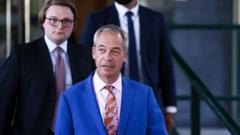
Clacton By-Election: A Turning Point in British Politics
The Clacton by-election has emerged as a pivotal moment in contemporary British politics, with Reform UK leader Nigel Farage positioning the contest as a fundamental clash between establishment institutions and ordinary citizens. However, his vision for this electoral showdown has been met with significant skepticism from traditional political powerhouses, who have collectively decided against running candidates.
Major Parties Step Back from Competition
In a striking development, leading political organizations have announced their intention to sit out the Clacton by-election rather than mount competitive campaigns. This unprecedented decision reflects the complex political landscape surrounding Farage's candidacy and the broader implications for British electoral contests.
Labour's Response to the Campaign
The Labour Party has characterized the by-election as a "circus," dismissing Farage's framing of the contest as a genuine battle between establishment and populist forces. This critical assessment suggests Labour views the electoral competition through a fundamentally different lens, emphasizing concerns about the tone and substance of the campaign rather than engaging directly in the race.
Conservative and Liberal Democrat Positions
Similarly, both the Conservative Party and the Liberal Democrats have chosen not to field candidates, marking an unusual development in British electoral politics. Their withdrawal from the Clacton by-election underscores the complicated dynamics at play and suggests these parties may have strategic reasons for avoiding direct confrontation with Farage's Reform UK movement.
Farage's Vision for the Contest
Farage has articulated a clear narrative for the Clacton by-election, presenting it as more than a routine electoral exercise. He envisions the contest as a referendum on whether establishment political structures truly represent the interests of ordinary British citizens. This messaging strategy attempts to elevate the significance of the by-election beyond local constituency concerns to broader national questions about political representation and accountability.
The Reform UK leader's framing suggests he views this particular race as emblematic of deeper tensions within British society and governance. By characterizing it as "establishment versus the people," Farage seeks to mobilize supporters who share anxieties about traditional political institutions and their responsiveness to constituent needs.
Implications for British Electoral Politics
The decision by major parties to abstain from the Clacton by-election raises important questions about contemporary British politics. Historically, by-elections have served as opportunities for established parties to demonstrate their relevance and appeal to local voters. The collective withdrawal of Labour, Conservative, and Liberal Democrat candidates suggests a significant shift in strategic thinking or a deliberate choice to avoid amplifying narratives they find problematic.
This development may also reflect internal calculations about the likely outcome and the political costs of engagement. By declining to contest the seat actively, major parties may hope to minimize the profile and perceived legitimacy of what they view as a carnival-like spectacle rather than a serious electoral engagement.
The Broader Context of Reform UK's Rise
The Clacton by-election occurs within the context of Reform UK's growing prominence in British politics. Farage's party has positioned itself as an alternative to traditional political establishments, appealing to voters who feel alienated from mainstream political discourse and conventional partisan alignments. The absence of serious opposition in this particular contest may inadvertently strengthen Reform UK's narrative about establishment indifference to genuine political competition.
What This Means for Voters and Democracy
For Clacton constituents, the by-election presents an unusual scenario where they will be choosing between Farage's Reform UK and candidates from smaller political movements, given the withdrawal of major party contenders. This dynamic fundamentally alters the nature of electoral choice available to local voters and raises questions about representation and democratic engagement.
The situation underscores ongoing debates within British politics about how to effectively respond to populist movements and anti-establishment sentiment. The decision by established parties to largely ignore the Clacton by-election may be viewed either as strategic restraint or as a abdication of responsibility to engage voters in meaningful democratic deliberation.
Looking Forward
The Clacton by-election will likely be closely watched as a barometer of public sentiment regarding Farage's Reform UK and the broader trajectory of British politics. Regardless of the outcome, this contest has already demonstrated the shifting dynamics of electoral competition and the complex calculations facing traditional political establishments in responding to emerging challengers.