Feral Children: Why Kids Deserve Freedom to Explore Outdoors
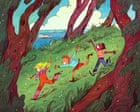
Feral Children: The Paradox of Adult Expectations
Adults frequently express their desire for feral children to occupy more space in the world, to be visible and present. Yet paradoxically, when young people do claim their rightful place, society demands they become invisible and silent. This contradiction lies at the heart of contemporary debates about childhood freedom, independence, and the role of unstructured play in development.
The concept of feral children—young people granted the autonomy to explore, play, and learn outside the constraints of constant adult supervision—challenges modern parenting norms. These children develop resilience, creativity, and self-reliance through direct engagement with their environment, learning lessons that structured activities cannot provide.
Island Life and the Transition to Independence
On Peaks Island, a small Maine community accessible only by ferry approximately three miles off Portland's coast, childhood experiences reveal much about how geography shapes growing up. Residents of this island community experience a unique milestone: childhood officially transitions when students reach the age required to commute via the 7:15 AM ferry to mainland schools.
The island maintains an elementary school for younger pupils, but secondary education requires daily ferry transportation. This geographic reality transforms a simple school transfer into a meaningful rite of passage. Students boarding that early morning ferry undergo a symbolic shift from protected island childhood to the broader world of mainland adolescence.
The Geography of Growing Up
Living year-round on an island creates distinct developmental patterns. Feral children in island communities naturally develop independence earlier than suburban counterparts. The isolation necessitates self-sufficiency; island young people cannot simply call for parental pickup or rely on nearby commercial amenities. They navigate tidal schedules, seasonal weather variations, and limited resources through direct problem-solving.
The ferry ride itself becomes formative. Students develop time management skills, social connections across age groups, and comfort with autonomous decision-making. They learn responsibility and planning as everyday necessities rather than abstract concepts taught in classrooms.
Unstructured Play and Child Development
Contemporary research increasingly validates what island communities have long practiced: feral children benefit immensely from unstructured outdoor time. Without constant adult direction, young people develop crucial skills including creative thinking, risk assessment, emotional regulation, and social cooperation.
These benefits extend beyond immediate childhood. Studies demonstrate that children with significant unsupervised outdoor play time develop stronger problem-solving abilities, greater confidence in unfamiliar situations, and more robust mental health outcomes. The freedom to roam, explore, and occasionally fail under manageable circumstances creates resilience that structured activities cannot replicate.
The Cost of Constant Supervision
The modern trend toward heavily supervised childhoods, while motivated by protective instincts, carries hidden costs. When feral children—or any children—never experience autonomous exploration, they miss critical developmental opportunities. They may struggle with independent decision-making, risk evaluation, and self-directed learning.
The irony intensifies when adults simultaneously complain that young people lack initiative, independence, and problem-solving capacity. These complaints often emerge from the same culture that eliminated unsupervised childhood through organized activities, digital monitoring, and structured schedules.
Societal Contradictions in Childhood Freedom
Society's mixed messages create confusion about childhood's proper role. Adults want young people present and engaged, yet demand they occupy space quietly and conveniently. Feral children—active, vocal, and enthusiastically present—challenge this contradiction by existing authentically rather than conforming to adult convenience.
The push-back against young people making noise, taking up space, and living vibrantly reflects not their misbehavior but adults' discomfort with sharing public spaces. This tension appears across contexts: parks, beaches, public transportation, and neighborhoods all become sites where children's natural exuberance confronts adult expectations of order and silence.
Reclaiming Childhood Freedom
Communities and families increasingly recognize the value in permitting feral children to experience less-structured childhoods. This does not mean abandonment or neglect, but rather intentional allowance of independent exploration within reasonable safety parameters.
Progressive parenting approaches validate island traditions and rural childhoods where young people roam, explore, and learn through direct environmental engagement. Providing feral children with genuine autonomy—to make decisions, encounter challenges, and navigate consequences—builds capable, confident adults.
Conclusion
The defense of feral children represents more than nostalgia for simpler times. It reflects evidence-based understanding that human development requires autonomy, exploration, and occasional risk. As communities like Peaks Island demonstrate, geographic circumstances can preserve these developmental necessities. Elsewhere, families and societies must intentionally create space for feral children to grow, learn, and ultimately thrive through the transformative power of freedom.