
Helium-3 Mining: The Moon's Untapped Energy Resource
Understanding Helium-3: A Rare Isotope with Massive Potential
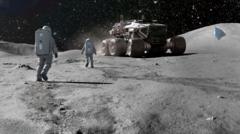
Helium-3 mining on the moon represents one of the most ambitious energy initiatives of our time. This rare isotope, virtually nonexistent on Earth's surface, exists in abundance within the lunar regolith and could transform our approach to clean energy production. The escalating costs of Helium-3 on terrestrial markets, combined with projections indicating exponential demand growth, have prompted leading space agencies and private corporations to seriously contemplate extracting this valuable resource from our nearest celestial neighbor.
Helium-3 is a stable isotope of helium containing two protons and one neutron. Unlike its more common counterpart, Helium-4, this variant possesses unique nuclear properties that make it exceptionally valuable for advanced fusion reactors and other sophisticated applications. The shortage of Helium-3 on Earth stems from its minimal natural occurrence in our atmosphere and the fact that historical nuclear weapons testing consumed substantial quantities of available reserves.
Why Helium-3 Matters: Applications and Market Demand
The scientific community recognizes Helium-3 as crucial for next-generation fusion energy technology. Fusion reactors powered by Helium-3 would produce significantly less radioactive waste compared to traditional nuclear fission plants, offering a cleaner alternative for global energy needs. Furthermore, this isotope finds applications in medical imaging, neutron detection systems, and military instrumentation, all of which drive consistent demand from government and private sectors.
Current market prices for Helium-3 reflect its scarcity, with costs reaching thousands of dollars per liter. As technological advancement accelerates the development of fusion reactors capable of utilizing this resource efficiently, demand projections suggest substantial increases in required quantities. This economic reality has catalyzed serious discussions within aerospace and energy sectors about establishing viable extraction methods.
The Lunar Source: Why the Moon Holds Abundant Helium-3
The moon's surface accumulated vast quantities of Helium-3 over billions of years through solar wind interactions with the lunar regolith. Unlike Earth, which benefits from a protective magnetic field deflecting solar wind particles, the moon's unshielded surface directly captures these charged particles, gradually concentrating Helium-3 in the top layers of moon dust. Scientists estimate that the lunar regolith contains approximately one million tons of this valuable isotope, sufficient to meet global energy demands for centuries.
This extraordinary concentration makes lunar extraction theoretically viable. A single shuttle mission delivering equipment to the moon could potentially return with quantities of Helium-3 worth billions of dollars in terrestrial markets. The challenge, however, lies not in the resource's availability but in developing economically sustainable extraction and transportation methods.
Mining Operations: Technical Feasibility and Challenges
Proposed lunar mining operations would involve heating the moon's surface material to temperatures exceeding 600 degrees Celsius, causing absorbed Helium-3 to release into the vacuum. Specialized collection systems would then capture and compress this gas for storage and eventual transport back to Earth. While conceptually straightforward, implementing such operations presents unprecedented technical obstacles.
The extreme lunar environment—with temperature fluctuations ranging from minus 173 degrees Celsius during night to 127 degrees Celsius during day—demands robust equipment engineering. Extended operational periods would require establishing permanent or semi-permanent human presence on the lunar surface, necessitating life support systems, power generation facilities, and comprehensive safety infrastructure. Current technological capabilities permit construction of such systems, but costs remain prohibitively high.
Economic Viability Assessment
For lunar Helium-3 mining to become economically viable, breakthrough developments in reusable rocket technology and automated extraction systems must occur. Companies like SpaceX, through initiatives such as the Falcon Heavy reusable rocket program, are progressively reducing space access costs. Should these trends continue, the economic equation favoring lunar resource extraction could fundamentally shift within the coming decades.
International and Private Sector Initiatives
Multiple organizations have initiated serious planning for lunar resource exploitation. Space agencies from numerous countries have incorporated resource extraction studies into their lunar exploration programs. Simultaneously, private aerospace corporations have begun formulating business plans predicated on establishing lunar mining operations as a revenue-generating enterprise.
These initiatives reflect growing confidence that Helium-3 mining on the moon will eventually transition from theoretical speculation to practical reality. International space law, particularly the Outer Space Treaty of 1967, permits resource extraction from celestial bodies, though questions regarding ownership rights and extraction rights continue generating diplomatic discussions.
Future Outlook: Timeline and Realistic Expectations
While Helium-3 mining on the moon captures public imagination, realistic timelines extend several decades into the future. Most credible projections suggest that sustained lunar mining operations could commence sometime between 2040 and 2060, contingent upon continued technological advancement and declining space access costs. The transition from current experimental phases to commercial-scale operations will require sustained investment, international cooperation, and breakthrough innovations.
The pursuit of lunar Helium-3 ultimately represents humanity's expanding resource requirements and our determination to seek sustainable energy solutions. Whether this ambitious endeavor succeeds depends upon continued dedication to space exploration and technological progress.


