
Iran's Supreme Leader Absent at Senior Officials' Funeral
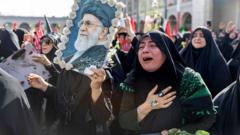
Supreme Leader's Notable Absence at Ayatollah Funeral Ceremony
Iran's supreme leader has maintained a conspicuous absence as senior government officials convened for the funeral proceedings of a prominent ayatollah. The Iran supreme leader absent situation has drawn significant international attention, with observers monitoring the implications of this high-profile non-appearance at what represents a major state occasion in the Islamic Republic.
The funeral service brought together numerous high-ranking members of Iran's political and religious establishment, yet the conspicuous absence of the supreme leader was immediately noted by both domestic and foreign analysts. This marks a departure from typical protocol for such significant ceremonial events within Iran's governmental structure.
Context of Recent Developments
Mojtaba Khamenei, a key figure in Iranian politics, has not appeared publicly since the incident that resulted in the death of his father, marking a significant gap in his public visibility. This absence coincides with heightened tensions emanating from the broader US-Israel military engagement with Iran, which fundamentally altered the regional security dynamics.
The timing of the Iran supreme leader absent from these proceedings underscores the complexity of current circumstances facing the Islamic Republic's leadership. Observers have characterized this period as particularly sensitive given the geopolitical context in which it occurs.
Government Officials' Participation and Significance
Despite the supreme leader's absence, the funeral attracted an impressive delegation of senior Iranian officials, demonstrating the government's formal acknowledgment of the deceased's prominence within religious and political circles. The attendance of high-ranking cabinet members, military commanders, and religious authorities reflected the importance accorded to the departed ayatollah.
The participation of these senior figures provided a visible demonstration of governmental continuity and institutional strength, even in the absence of the nation's most senior leader. Such ceremonies traditionally serve as important occasions for affirming state cohesion and institutional legitimacy.
Regional Tensions and Their Backdrop
The broader context of US-Israel military operations against Iran has created an unprecedented environment for Iran's leadership. These circumstances have reshaped priorities and shifted focus within governmental circles toward security and strategic concerns. The outbreak of hostilities introduced new variables into Iran's domestic political calculations and international relations framework.
The incident resulting in the death of the ayatollah occurred during the initial phases of this military confrontation, positioning it within a critical juncture of regional history. This timing has amplified the significance of subsequent governmental actions and public appearances, making the Iran supreme leader absent situation particularly noteworthy within this strategic context.
Implications for Iran's Political Structure
The absence of the supreme leader from such a high-profile state occasion raises questions about operational continuity within Iran's hierarchical power structure. Historically, the supreme leader's participation in major ceremonial events represents a crucial symbol of institutional authority and governmental stability.
Government observers have suggested that the current circumstances may reflect either security considerations or health-related concerns, though official statements on the matter remain limited. The Iranian government has not provided extensive commentary regarding the supreme leader's non-appearance at the funeral proceedings.
International Perspective and Analysis
Foreign ministries and international observers have been monitoring developments within Iran's government with considerable interest. The Iran supreme leader absent from the funeral service has become part of broader discussions about Iran's internal political dynamics and the potential impact of regional military tensions on governmental structures.
Analysts from various nations have offered differing interpretations of the significance of this absence, with some viewing it as a routine matter of scheduling or security while others perceive deeper implications for Iran's institutional stability and decision-making processes.
Looking Forward
As developments continue to unfold, international observers remain focused on the supreme leader's subsequent public appearances and any official statements that might clarify the circumstances of this notable absence. The coming weeks will likely provide additional context for understanding the current situation facing Iran's highest levels of government and the implications for regional stability.


