
Israel Launches Military Strikes in Southern Lebanon Amid Regional Tensions
Military Operations Resume in Southern Lebanon
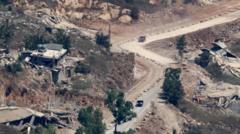
Israel Lebanon military strikes have resumed in the southern region, with reports indicating that at least one person has been killed according to state media outlets. This escalation comes just one day after Lebanon and Israel formally signed a framework agreement aimed at addressing long-standing tensions between the neighboring countries and establishing mechanisms for conflict resolution.
Context of the Framework Agreement
The signing of the framework agreement represents a significant diplomatic effort to establish new protocols between the two nations. The accord was designed to create structured dialogue channels and establish clear boundaries regarding military operations and civilian safety. However, the immediate resumption of Israel Lebanon military strikes suggests that implementation challenges and disagreements over interpretation of the terms may already be emerging.
International observers have noted that such agreements typically require a transitional period during which both parties establish coordination mechanisms and verify compliance procedures. The quick escalation indicates potential complications in this implementation phase, with various parties questioning the commitment to peaceful resolution.
Hezbollah's Response and Condemnation
Hezbollah, the prominent political and military organization operating within Lebanese territory, has issued strong condemnation of the recent military operations. The organization has criticized what it characterizes as violations of the newly established framework agreement, arguing that Israeli actions contradict the spirit and letter of the accord signed just hours earlier.
The group's response underscores the complex security dynamics in the region, where multiple actors hold significant influence over military decisions and diplomatic negotiations. Hezbollah's position as both a political entity represented in Lebanese government and an armed organization adds layers of complexity to understanding the conflict dynamics and implementation of any agreements.
Regional Security Implications
The resumption of Israel Lebanon military strikes raises concerns among international observers regarding the stability of the broader region. The Middle East conflict has long been characterized by cycles of escalation and de-escalation, with external actors and non-state organizations playing crucial roles in determining outcomes.
State media reports indicate that casualty figures remain low at this stage, but military analysts warn that without immediate de-escalation efforts, the situation could deteriorate rapidly. The framework agreement itself contained provisions for emergency communication channels and third-party mediation, which may be activated as tensions continue to rise.
International Response and Diplomatic Efforts
International bodies and neighboring countries have been monitoring developments closely. Regional powers and Western nations have expressed concern about the breakdown in implementation of the newly signed agreement, with some offering to facilitate discussions between parties.
Diplomatic sources suggest that the timing of these strikes may reflect disagreements over specific provisions within the framework agreement, particularly regarding military presence in border regions and the withdrawal of forces. These technical details often prove more contentious than the broader principles outlined in any accord.
Forward Outlook for Peace Negotiations
Despite the current escalation, diplomatic channels remain open between Lebanon, Israel, and international mediators. The framework agreement's existence demonstrates that both parties recognize the mutual benefits of peaceful coexistence, even if implementation faces immediate obstacles.
Observers anticipate that continued negotiations will focus on clarifying ambiguous provisions, establishing verification mechanisms, and creating confidence-building measures. The international community has pledged support for these efforts, recognizing that regional stability carries global implications for energy security, trade routes, and broader geopolitical balance.
The coming days will be critical in determining whether the framework agreement can survive this early test or whether escalating tensions will ultimately undermine the diplomatic progress achieved through its signing.


