
Israeli Airstrikes Kill 13 in Gaza Following Hamas Disarmament Agreement
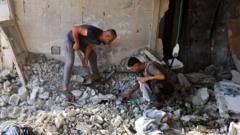
Israeli Airstrikes Result in Significant Casualties Across Gaza
Israeli airstrikes have resulted in the deaths of at least 13 individuals across multiple locations in Gaza, occurring in the aftermath of a Hamas disarmament agreement. The military operations targeted Gaza City, Khan Younis, and Deir el-Balah, marking a significant escalation in the region despite recent diplomatic developments. Israeli defense officials claim the airstrikes were focused on neutralizing military operatives and dismantling tactical infrastructure.
Targeting Military Infrastructure and Operatives
According to Israeli military statements, the airstrikes were conducted with the explicit purpose of striking military targets and eliminating armed personnel affiliated with Hamas. The operations span three critical population centers within the Gaza Strip, demonstrating the widespread nature of the military campaign. Defense authorities maintain that the strikes represent a proportionate response to security threats and were designed to degrade militant capabilities in the region.
Multiple Strike Locations and Impact Assessment
The breadth of the Israeli airstrikes across Gaza City, Khan Younis, and Deir el-Balah indicates a coordinated military operation with multiple objectives. Each location targeted represents a significant population center within Gaza, raising concerns about civilian casualties. Initial reports suggest that the strikes caused substantial destruction to buildings and infrastructure in the affected areas. The simultaneous nature of operations across these three distinct locations underscores the scale and coordination of the military campaign.
Hamas Disarmament Agreement Context
The timing of these Israeli airstrikes follows recent announcements regarding a Hamas disarmament deal, creating considerable tension and confusion regarding the status of ceasefire negotiations. The agreement had been presented as a potential breakthrough in resolving the ongoing conflict, yet military operations have continued unabated. This apparent contradiction has drawn international attention and raised questions about the viability and implementation mechanisms of the proposed disarmament accord. Observers note the complexity of enforcing such agreements amid sustained military operations.
International Response and Humanitarian Concerns
The latest casualty figures from the Israeli airstrikes have renewed international scrutiny regarding civilian protection in the Gaza conflict. Humanitarian organizations continue to express alarm at the escalating violence despite diplomatic progress. The humanitarian situation remains dire, with displacement, infrastructure damage, and limited access to essential services affecting the civilian population. International bodies have called for immediate restraint and renewed commitment to peaceful resolution mechanisms.
Military Strategic Considerations
Israeli military leadership maintains that the airstrikes address critical security imperatives and represent necessary responses to perceived threats emanating from Gaza. The continuation of military operations alongside diplomatic negotiations reflects the complex security calculations influencing Israeli defense policy. Military officials argue that tactical operations serve to maintain strategic advantage while negotiations proceed. This dual approach of military action and diplomatic engagement characterizes the current phase of the conflict.
Ongoing Tensions and Future Trajectory
The escalation following the Hamas disarmament agreement announcement suggests that substantial challenges remain in achieving lasting peace in the region. Both military and diplomatic efforts are occurring simultaneously, creating an ambiguous environment for conflict resolution. Local and international stakeholders are monitoring developments closely, concerned about the potential for further escalation or breakthrough. The path forward remains uncertain as military operations continue alongside diplomatic initiatives aimed at reducing violence and establishing sustainable agreements for regional stability.


