
Navy Opts for Drone-Equipped Warships Over Aging Destroyer Replacement
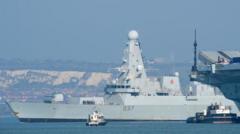
Navy Shifts Strategy Toward Drone-Equipped Warships
In a significant departure from traditional naval doctrine, the government has announced a substantial commitment to developing drone-equipped warships as part of its forthcoming defence investment plan. Rather than pursuing the conventional path of replacing aging destroyer vessels, military strategists have determined that drone-equipped warships represent a more cost-effective and strategically advantageous direction for the nation's maritime capabilities.
The decision to prioritize drone-equipped warships reflects broader changes in modern warfare dynamics and technological advancement. Defence officials have emphasized that this investment strategy aligns with contemporary security challenges while maximizing operational efficiency and reducing long-term expenditure.
Strategic Rationale Behind the Decision
The shift away from replacing traditional destroyers in favor of drone-equipped warships demonstrates a calculated reassessment of naval priorities. Military analysts note that unmanned vessel technology offers unprecedented flexibility in maritime operations, allowing for extended deployment periods without risking personnel aboard conventional warships.
Drone-equipped warships can perform surveillance, reconnaissance, and tactical operations across vast oceanic territories with minimal crew requirements. This technological evolution addresses contemporary concerns about resource allocation while maintaining robust naval presence across critical maritime zones.
Financial Implications and Investment Scope
The government's defence investment plan allocates substantial resources toward advancing drone technology and autonomous vessel systems. This funding direction suggests that decision-makers view drone-equipped warships as providing superior operational returns compared to the significantly higher costs associated with constructing and maintaining traditional destroyer vessels.
By redirecting capital toward drone-equipped warships rather than conventional naval construction, military budgets can be distributed across multiple platforms, enhancing overall fleet resilience and adaptability. This approach permits simultaneous advancement in various maritime technologies while respecting fiscal constraints.
Technological Advancement in Maritime Defense
Modern drone-equipped warships incorporate advanced sensor systems, artificial intelligence-driven navigation capabilities, and sophisticated communication networks. These technological components enable coordinated operations between manned and unmanned vessels, creating integrated maritime defense systems far more capable than individual platform classes.
The development of drone-equipped warships reflects decades of research into autonomous systems and unmanned vehicle operation. Contemporary versions feature improved reliability, extended operational ranges, and enhanced payload capacities compared to earlier generations.
Operational Advantages and Performance Metrics
Drone-equipped warships deliver several operational advantages over aging destroyer platforms. Extended operational endurance, reduced personnel vulnerability, lower operational costs per mission, and superior data collection capabilities represent measurable improvements. Additionally, drone-equipped warships can be deployed rapidly in response to emerging maritime security concerns.
The flexibility inherent to drone-equipped warships enables multi-mission configurations, permitting rapid adaptation to diverse operational requirements without requiring extensive platform modifications.
Future of Naval Doctrine Evolution
This strategic pivot toward drone-equipped warships represents a fundamental evolution in naval doctrine. Rather than maintaining large crews aboard vulnerable platforms, modern maritime defense increasingly emphasizes distributed operations across multiple autonomous systems.
The government's commitment to drone-equipped warships signals confidence in emerging technologies while acknowledging that traditional destroyer replacement cycles no longer represent optimal defence investments. This transformation will likely influence allied nations' strategic planning and maritime force composition decisions.
Implementation Timeline and Expectations
The defence investment plan establishes clear objectives for drone-equipped warships development and deployment. Successive funding phases will support prototype development, testing, and eventual operational integration into the active fleet.
Military leadership expects drone-equipped warships to achieve operational status within defined timeframes, enabling gradual fleet transition while preserving existing destroyer capabilities during the modernization period. This phased approach minimizes operational disruption while systematically advancing maritime capabilities.


