
PM Addresses Living Costs Crisis in Inaugural Cabinet Session
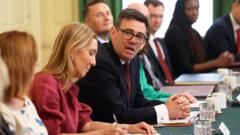
Prime Minister Tackles Living Costs at First Cabinet Meeting
The newly appointed Prime Minister convened his inaugural cabinet session to address the escalating living costs cabinet meeting as a central priority for the administration. This strategic gathering marks the beginning of a comprehensive approach toward alleviating financial pressures facing households across the nation.
VAT Reduction on Household Electricity Announced
In a significant economic measure, the government introduced a reduction in Value Added Tax (VAT) applied to household electricity bills. This policy adjustment represents a direct effort to lower energy expenses for families struggling with rising utility costs. The prime minister electricity VAT cut signals a commitment to immediate relief in one of the most essential household expenditures.
The VAT reduction on electricity is positioned as a cornerstone initiative within the broader economic strategy. By decreasing the tax burden on energy consumption, the administration aims to free up disposable income for households while promoting confidence in government economic stewardship.
Strategic Government Response to Economic Pressures
The cabinet convening emphasized the urgency of addressing household energy reduction and related financial challenges. Senior government officials gathered to align on multiple fronts addressing the cost-of-living crisis, signaling that this inaugural meeting would set the tone for the administration's economic priorities.
The Prime Minister's decision to prioritize this issue at the first cabinet session underscores the gravity of living cost concerns affecting constituents nationwide. Economic advisors and department heads were briefed on coordinated strategies spanning energy, welfare, and fiscal policy.
Broader Government Economic Framework
Beyond the electricity VAT adjustment, this government economic policy session explored interconnected solutions addressing inflation, wages, and essential services. The cabinet discussed potential measures across multiple sectors to create comprehensive relief for vulnerable populations.
Officials acknowledged that energy costs represent a substantial portion of household budgets, particularly for low-income families and pensioners. The targeted VAT reduction on electricity exemplifies a direct intervention approach, contrasting with longer-term structural reforms also under consideration.
Cabinet Session Priorities and Future Direction
This cabinet session priorities established a framework for ongoing policy development throughout the administration. The Prime Minister articulated that sustained attention to living costs would remain central to governmental decision-making across all departments.
The inaugural meeting included discussions on coordinating between Treasury, Energy, and Social Affairs departments to ensure coherent policy implementation. Officials were tasked with developing complementary measures that would amplify the impact of the VAT reduction.
Implementation Timeline and Expected Impact
The government outlined a framework for rapid implementation of the electricity VAT reduction, with officials expected to finalize technical details during subsequent cabinet meetings. Early estimates suggest the measure could provide meaningful savings for average households within the coming months.
Department representatives presented analysis indicating that the VAT cut would generate approximately proportional savings across different household income levels, though lower-income families would experience more significant relative relief due to energy costs consuming a larger share of their budgets.
Long-term Living Costs Strategy
The cabinet session revealed that the electricity VAT reduction represents an immediate intervention within a broader, multi-faceted approach to living costs. The Prime Minister indicated that future meetings would address complementary areas including housing affordability, food price pressures, and wage growth initiatives.
This comprehensive framework demonstrates recognition that sustainable relief requires coordinated action across multiple policy domains rather than isolated interventions. The cabinet committed to regular reviews of economic indicators to assess policy effectiveness and identify necessary adjustments.


