
Spain's PM Holds Traffickers Accountable for 60,000 Migrants Reaching Ceuta
Spain's PM Holds Traffickers Accountable for 60,000 Migrants Reaching Ceuta
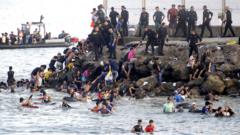
Spain's Prime Minister has pointed the finger directly at human trafficking networks following the extraordinary influx of 60,000 migrants reaching Ceuta from Morocco in a single event. The unprecedented movement of people has sparked significant concern among European nations and raised questions about border security and humanitarian response protocols across the continent.
Rapid Return to Morocco Documented
Spanish authorities reported that the vast majority of individuals who successfully entered Spanish territory had voluntarily returned to Morocco by Friday evening. This information contradicts initial fears that the entire population would seek to remain within European borders, suggesting that many migrants may have been attempting transit rather than permanent settlement. The rapid reversal of the migration flow has been attributed to coordinated efforts by Spanish border officials working alongside Moroccan authorities.
Italy's Response: Schengen Agreement Suspended
In a dramatic escalation of tensions within the European Union, Italy announced the suspension of its Schengen agreement regarding free movement with Madrid. This unprecedented action represents a significant rupture in the cherished principles of borderless travel that have defined European integration for decades. The Schengen suspension effectively reinstates border controls between Italy and Spain, restricting the free movement of citizens and creating new barriers to commerce and travel within the EU zone.
The Role of Human Trafficking Networks
Spain's government has emphasized that organized trafficking operations bear primary responsibility for the coordinated movement of tens of thousands of migrants. These criminal networks exploit vulnerable individuals, charging substantial fees while providing false promises and dangerous passage routes. The trafficking infrastructure that facilitated the mass movement to Ceuta represents a complex problem requiring international cooperation and robust law enforcement responses across Mediterranean nations.
Geopolitical Tensions and Border Security
The crisis at Ceuta highlights ongoing tensions between Spain and Morocco regarding maritime borders and migration control. The enclave, located on Moroccan territory but under Spanish sovereignty, has become a flashpoint for migration disputes. Spanish officials have called for enhanced border security measures and increased international support to manage the overwhelming humanitarian challenge presented by migrants from sub-Saharan Africa and beyond seeking entry into European territory.
European Union Response Framework
The incident has prompted discussions within European leadership circles regarding migration policy and external border management. The suspension of the Schengen agreement between Italy and Spain signals growing frustration among member states about unequal burden-sharing in handling migration pressures. EU officials are now examining whether existing protocols adequately address mass migration events and whether new mechanisms are needed to support frontline nations.
Humanitarian Concerns
Despite the rapid return to Morocco, humanitarian organizations have raised questions about the conditions migrants experienced during their attempt to reach Spain. Advocacy groups continue to emphasize the need for dignified treatment of vulnerable populations, including families with children and individuals fleeing persecution. The incident underscores ongoing debate about balancing border security with humanitarian obligations under international law.


