
Trump Reduces Military Exercises with South Korea Following Iran Conflict
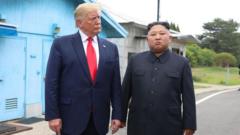
Trump Administration Adjusts Military Exercise Strategy
The Trump administration has announced a significant decision to scale back military exercises with South Korea, marking a substantial shift in US defense policy toward the Korean peninsula. This reduction in military drills comes as the United States maintains its focus on other international conflicts, including recent developments in the Middle East.
The decision to reduce military exercises with South Korea reflects the administration's broader strategic approach to maintaining stability in the region while prioritizing diplomatic relations. Officials have indicated that the military exercises reduction is part of a coordinated effort to balance military readiness with diplomatic engagement objectives.
Key Factors Behind the Decision
Presidential Perspective on Regional Diplomacy
President Trump emphasized his commitment to maintaining what he describes as a "very good relationship" with North Korea's leadership. This diplomatic foundation has directly influenced the administration's approach to military exercises with South Korea, as officials seek to avoid escalating tensions on the Korean peninsula through large-scale military operations.
The president's personal engagement with North Korean leadership represents a departure from traditional Cold War-era defense strategies. By prioritizing diplomatic channels and relationship-building, the administration believes it can achieve greater long-term stability without relying solely on military demonstrations of strength.
Impact on Joint Defense Operations
The reduction of military drills between the United States and South Korea marks a notable change in the longstanding partnership between the two nations. South Korea, positioned as a critical ally in the Asia-Pacific region, has long participated in regular joint military exercises designed to maintain readiness and strengthen defense coordination.
These military exercises have historically served multiple purposes: demonstrating allied strength to potential adversaries, maintaining operational readiness, and reinforcing the security commitment between Washington and Seoul. The decision to scale back these operations suggests a recalibration of strategic priorities within the Trump administration's overall approach to Asian security policy.
Strategic Implications for the Region
North Korea Considerations
The Trump administration's willingness to reduce military exercises reflects recognition of North Korea's sensitivities regarding large-scale allied military operations near its borders. By scaling back these drills, officials hope to create conditions more conducive to ongoing diplomatic discussions and negotiations regarding denuclearization and broader security arrangements.
This approach acknowledges that military exercises with South Korea, while defensive in nature, have historically been viewed by North Korean leadership as provocative actions requiring responsive military posturing. By reducing the frequency and scale of these operations, the administration aims to lower overall tension levels on the peninsula.
South Korean Security Perspective
South Korea faces a unique security situation as the direct recipient of potential threats from North Korea. The decision to reduce military exercises with the United States raises important questions about how Seoul will maintain its defensive capabilities and military readiness in the absence of regular joint operations with its primary security guarantor.
South Korean officials have expressed understanding regarding the diplomatic rationale behind the military exercises reduction, though they remain committed to maintaining strong defense postures. The nation continues to invest in its own military capabilities while working with the United States to ensure that security commitments remain credible and effective.
International Context and Timing
The announcement of reduced military drills with South Korea comes during a period of heightened tensions in the Middle East, where the United States has been managing complex relationships with multiple regional powers. This timing suggests that the Trump administration is managing competing priorities across different geographic regions and allocating military resources according to perceived threat levels.
The decision also reflects broader questions about resource allocation within the Department of Defense and how the military can maintain readiness across multiple theaters while supporting diplomatic initiatives. By reducing the scope of exercises with South Korea, the administration may be freeing resources for other operational priorities while maintaining adequate security assurances for its South Korean ally.
Future Outlook and Strategic Considerations
The scaling back of military exercises represents an ongoing evolution in how the Trump administration approaches security partnerships in the Asia-Pacific region. Future military exercises with South Korea will likely reflect this new strategic framework, balancing the need for military readiness with diplomatic initiatives aimed at reducing tensions with North Korea.
As the situation develops on the Korean peninsula, both Washington and Seoul will need to carefully assess whether reduced military exercises support or undermine broader security objectives. The success of this approach will largely depend on whether diplomatic channels with North Korea remain productive and whether alternative security measures can adequately compensate for the reduced joint military training opportunities.


