
Ukraine Faces Critical Air Defense Crisis Amid Intensive Russian Missile Strikes
Ukraine Confronts Severe Interceptor Missile Shortage
Ukraine faces an increasingly critical interceptor missile shortage as Russian military operations intensify across the nation. The escalating demands on the country's air defense systems have exposed significant vulnerabilities in maintaining adequate supplies of protective weaponry, posing a substantial threat to civilian populations and military infrastructure across multiple regions.
The strain on Ukraine's defense capabilities became starkly apparent following a devastating assault on the country's airspace. President Volodymyr Zelensky disclosed that a massive Russian attack launched on Sunday comprised a coordinated barrage of 68 missiles and 351 strike drones targeting critical installations throughout the nation. This unprecedented scale of aerial bombardment represents one of the most intensive campaigns witnessed during the ongoing conflict.
Death Toll and Destruction in Kyiv Region
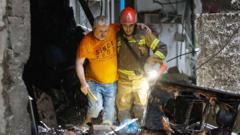
The relentless assault resulted in tragic consequences for civilians residing in the Kyiv region, where at least 23 individuals lost their lives during the attack. The casualties underscore the devastating human cost of prolonged aerial campaigns and the urgent necessity for enhanced defensive capabilities. Beyond the fatalities, substantial property damage and destruction of essential infrastructure have been documented across multiple neighborhoods and administrative districts.
Emergency response teams mobilized rapidly following the strikes, conducting search and rescue operations throughout affected areas. The destruction extended across residential zones, commercial districts, and critical utility infrastructure, leaving thousands of residents without access to essential services including electricity, heating, and water supplies during increasingly harsh winter conditions.
Scale of Military Offensive Unprecedented
The combination of 68 missiles and 351 drones represents an exceptionally large-scale assault, reflecting Russia's determination to maintain sustained pressure on Ukrainian defenses. The diversity of weapons employed—ranging from long-range cruise missiles to various drone platforms—necessitates correspondingly diverse defensive responses, placing extraordinary demands on Ukraine's military resources.
President Zelensky characterized the assault as a massive Russian attack, emphasizing the strategic nature of the offensive. The systematic targeting of infrastructure suggests deliberate efforts to undermine civilian resilience and strain the nation's capacity to sustain prolonged conflict. Defenders reported engaging numerous incoming threats throughout the engagement, with air defense units operating at maximum operational capacity.
Air Defense System Under Extreme Pressure
The documented shortage of interceptor missiles reflects the cumulative impact of sustained warfare on Ukraine's military resources. Each defensive engagement consumes irreplaceable inventory, yet the unrelenting pace of Russian attacks provides insufficient intervals for replenishment or recovery. Military analysts highlight this widening gap between defensive requirements and available weaponry as a critical vulnerability threatening national security.
Ukrainian officials have consistently advocated for increased military support from international partners, particularly advanced air defense systems capable of engaging multiple threats simultaneously. The current engagement patterns demonstrate that existing defensive infrastructure, though robust and effectively operated by skilled personnel, operates under constrained resource parameters that limit response flexibility.
International Response and Strategic Implications
The intensifying conflict dynamics have prompted renewed discussions within NATO and allied nations regarding escalated military assistance packages. Defense officials recognize that sustained Ukrainian resistance depends fundamentally on adequate supplies of specialized weaponry, including the interceptor missiles facing acute shortages.
Military strategists characterize Russia's volumetric assault tactics as deliberately designed to overwhelm defensive systems through sheer numerical superiority. By simultaneously launching hundreds of projectiles, attackers deliberately force defenders to expend limited inventory rapidly, creating opportunities for breakthrough strikes against inadequately protected targets.
Civilian Impact and Humanitarian Concerns
The assault's human toll extends beyond immediate casualties to encompass broader humanitarian consequences. Displaced residents seek temporary shelter, while medical facilities respond to surge demands from trauma casualties. The destruction of heating infrastructure presents acute wintertime dangers, particularly for vulnerable populations including elderly citizens and families with young children.
International humanitarian organizations have mobilized assistance programs addressing immediate needs while coordinating longer-term reconstruction planning. The cumulative effects of repeated attacks strain civil society resources and complicate stabilization efforts across affected regions.
Looking Forward: Defense Strategy Adjustments
Ukrainian military commanders acknowledge the necessity for strategic adaptation given persistent resource constraints. Enhanced coordination mechanisms, optimized targeting protocols, and efficiency improvements in defensive operations represent partial mitigation strategies. Nevertheless, fundamental solutions require sustained international support providing the specialized defensive systems needed to adequately counter Russian aerial capabilities.


