
Venezuela Earthquake Death Toll Reaches 188 as Rescue Efforts Continue
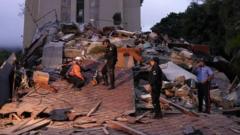
Venezuela Earthquake Devastates Nation with Significant Casualties
A Venezuela earthquake of catastrophic proportions has claimed the lives of at least 188 people across the country, with rescue teams continuing intensive search and recovery operations through collapsed structures and debris fields. The tragic Venezuela earthquake event unfolded when two powerful seismic waves, both exceeding seven magnitude on the Richter scale, struck within mere seconds of one another, compounding the destruction across multiple regions.
Scale of Destruction and Injury Count
Beyond the confirmed fatalities, the seismic disaster has left approximately 1,500 individuals injured, many requiring urgent medical attention in overwhelmed healthcare facilities. The close succession of these powerful tremors created a cascading effect of building collapses, infrastructure damage, and secondary hazards that continue to threaten survivors trapped beneath rubble and debris.
Emergency Response and Rescue Efforts
Emergency response teams mobilized rapidly following the initial seismic waves, establishing search and rescue operations throughout affected communities. Rescue workers equipped with specialized equipment navigate through unstable ruins, listening for signs of life and working against time to extract survivors from beneath concrete and metal wreckage. International humanitarian organizations have begun coordinating support with local authorities to enhance search capabilities and medical response capacity.
Characteristics of the Seismic Event
The remarkable feature distinguishing this Venezuela earthquake from typical seismic events is the shallow depth of both tremors. Shallow earthquakes typically cause more extensive surface damage compared to deeper seismic activity, as energy releases closer to populated areas with minimal attenuation. The seven-plus magnitude classification indicates these were major earthquakes capable of causing widespread destruction to buildings, infrastructure, and natural landscapes.
Impact on Infrastructure and Communities
Preliminary assessments reveal extensive damage to residential buildings, commercial structures, hospitals, and critical infrastructure throughout the affected regions. Roads have been fractured, water lines severed, and electrical systems compromised, complicating both rescue operations and provision of humanitarian assistance. Communities that experienced the most intense ground shaking face compounded challenges as damaged hospitals struggle to treat the 1,500 injured survivors while simultaneously serving as shelter for displaced residents.
International Assistance and Coordination
Global response mechanisms have activated, with neighboring countries and international disaster relief organizations offering technical expertise, medical personnel, and search equipment to support Venezuelan authorities. Coordination centers have been established to manage incoming aid, prioritize resource distribution, and maintain communication between rescue teams operating across multiple disaster zones.
Ongoing Challenges and Recovery Outlook
The Venezuela earthquake disaster presents formidable challenges for recovery operations extending weeks and months ahead. Engineers must assess structural integrity of partially damaged buildings before allowing reoccupancy. Psychological support services will be required for trauma survivors, while reconstruction efforts will demand substantial financial resources and sustained international cooperation to restore the affected regions to functional status.


